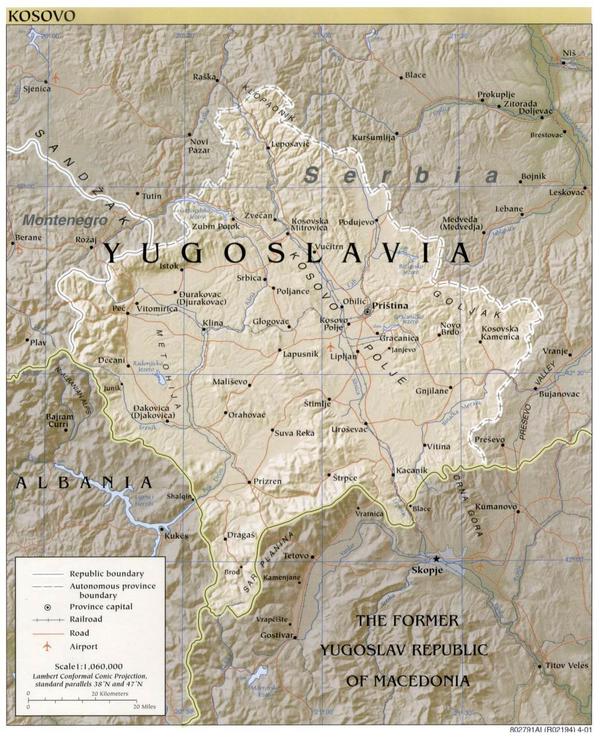
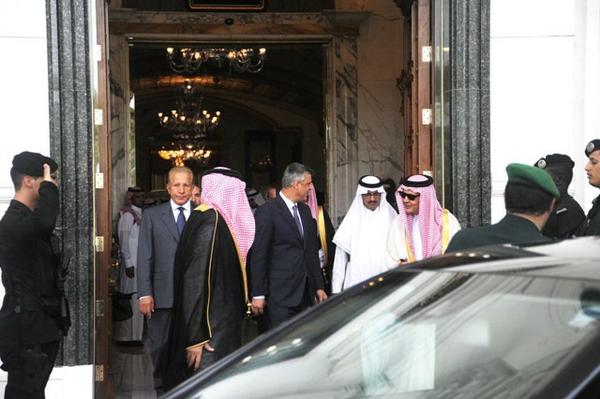
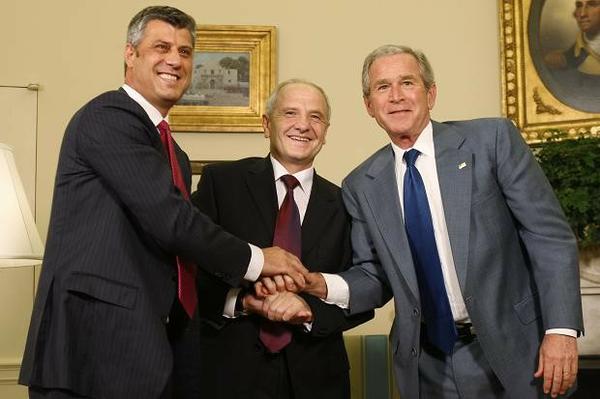
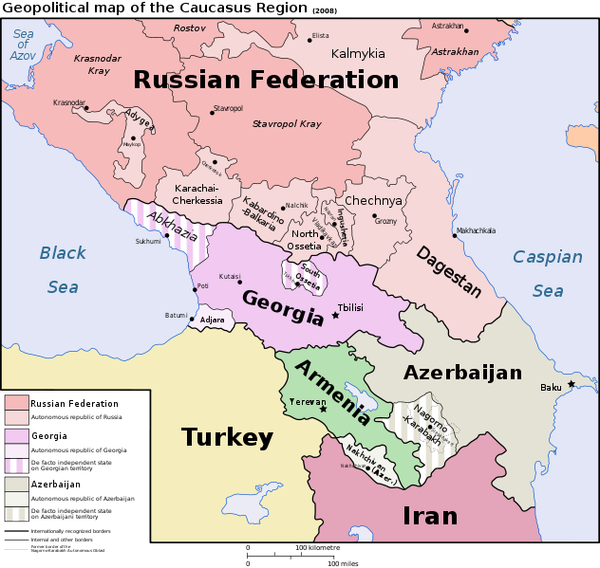
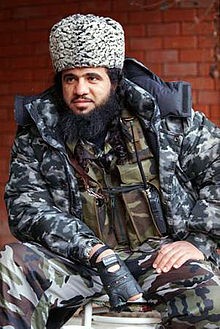
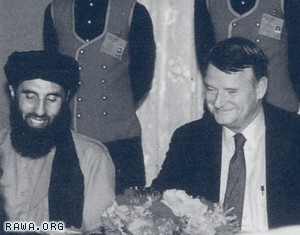
------------------------------------------------------------------------------------------------- Chapter Nine: "Holy War" and Heroin in Kosovo and the Caucasus "After bombing Yugoslavia into submission, NATO then stood by and submissively allowed the KLA to murder, pillage and burn. The KLA was given a free hand to do as they wished. Almost all of the non-Albanian population was ethnically cleansed from Kosovo under the watchful eyes of 40,000 NATO troops. —James Bissett, former Canadian Ambassador to Yugoslavia and Albania to Canadian newspaper Jihad and CIA Go to Kosovo The actual fighting in Bosnia-Herzegovina ended with the signing of the Dayton Accords in Paris on December 14, 1995 that put an end to the three-and-a-half-year long Bosnian War and opened the long-term NATO occupation of the country. NATO, and not the European Union, was in control. Bosnia-Herzegovina, once a multiethnic federal state, was established as a de facto Muslim state, in effect, a client state under control of the IMF and of NATO. Even before the Bosnian fighting ceased, Washington had shifted its attention to Kosovo, whose Albanian ethnic population was also predominantly Muslim and which had been part of Serbia more or less since the Middle Ages. The second front was being prepared in NATO's war against Serbia. The Clinton Administration had learned around that time of vast oil and gas reserves in the Caspian Sea and wanted to secure a pipeline through the Balkans to control that oil and, above all, keep it from the Russians.[1] In December 1995, the American Petroleum Institute in Washington, an organization representing the major US oil companies, had issued an estimate that the Caspian Basin, north of Afghanistan, contained "two-thirds of the world's known reserves, or 659 billion barrels."[2] The Caucasus was becoming a US strategic "area of interest," to put it mildly. A retired Croatian Army Major personally told this author, in Zagreb in 2006, of a private conversation he had had in 1995, just after the abrupt end of the Bosnian war. The Croatian military man asked a senior CIA officer in Zagreb whom he knew from the Bosnian War why it was that the US was so suddenly ending the fighting in Bosnia. The CIA man replied to the effect that, at that point, Washington found it far more important to secure a permanent military base in Kosovo, from where they would be able to control the entire region, including the Middle East and the Caucasus.[3] The tiny mountain area of Kosovo was split from Serbia to become a huge NATO base. The Clinton Administration's Pentagon had farmed out the training of what would come to be called the Kosovo Liberation Army (KLA) to a US private mercenary group made up of former US Special Forces and military. According to former US Army Captain David Hackworth, retired US military officers working for the private US military contractor MPRI (Military Professional Resources Incorporated) not only trained KLA personnel, Sunni Muslim in origin, but even fought alongside them against the Yugoslav government forces.[4] Former NSA official Wayne Madsen reported that what the US and Western media called the "Kosovo Liberation Army" was, in fact, a grouping of mafia clans in Kosovo who had been known drug traffickers well before working for the US. Madsen noted that covert support to the KLA was established around 1996 in the wake of the NATO Bosnia occupation as a "joint endeavor between the CIA and Germany's Bundesnachrichtendienst (BND). The task to create and finance the KLA was initially given to Germany: They used German uniforms, East German weapons, and were financed in part by drug money, according to intelligence analyst John Whitley."[5] In Kosovo, the Clinton Administration had no interest in backing moderates who were open to a diplomatic solution with Belgrade. The KLA leaders whom Washington chose were accused of assassinating moderate Kosovo Albanians, including some of those who agreed to the Rambouillet peace accords. According to Albanian State Television, the KLA had sentenced the democratically elected president of the Republic of Kosovo, Ibrahim Rugova, to death in absentia. During the Rambouillet peace talks, Washington deliberately froze out Kosovo moderates in favor of the Jihadists of the KLA mafia, who were guaranteed not to go for peace.[6] Washington wanted war, and the KLA Muslims were its warriors. By 1998, as the KLA matured its killing and sabotage skills under training from Pentagon contractor MPRI, the US and Germany recruited Mujahideen mercenaries from Afghanistan, Saudi Arabia, Bosnia, and elsewhere to train the KLA in guerrilla and diversion tactics. It was financed by Saudi Arabia and Kuwait.[7] One of the leaders of an elite KLA unit during the Kosovo conflict was Mohammed al-Zawahiri, brother of Egyptian Jihadist and Afghan and Bosnia veteran Ayman al-Zawahiri, Osama bin Laden's lieutenant at that time. From Terrorists to Heroin-Pushing "Freedom Fighters" During the war, the KLA jihadists collaborated with the NATO troops, and they were designated by NATO as "freedom fighters." In May 1999, in the midst of the NATO "humanitarian" bombing of Yugoslavia—by then reduced to only Serbia and Montenegro—The Washington Times newspaper published documentation that Clinton Administration officials were well aware that their Kosovo allies, the KLA, were trafficking in heroin. The paper reported from the documents it had obtained that Drug agents in five countries, including the United States, believe the KLA has aligned itself with an extensive organized crime network centered in Albania that smuggles heroin and some cocaine to buyers throughout Western Europe and, to a lesser extent, the United States. The documents tie members of the Albanian Mafia to a drug smuggling cartel based in Kosovo's provincial capital, Pristina. The cartel is manned by ethnic Albanians who are members of the Kosovo National Front, whose armed wing is the KLA. The documents show it is one of the most powerful heroin smuggling organizations in the world (emphasis added—F.W.E.). . . . Movement of drugs over a collection of land and sea routes from Turkey through Bulgaria, Greece and Yugoslavia to Western Europe and elsewhere is so frequent and massive that intelligence officials have dubbed the circuit the "Balkan Route."[8] The shocking report was ignored by mainstream media, as well as by the Clinton Administration. In 1998, a year before the illegal NATO bombing of Yugoslavia to "prevent ethnic cleansing" of the Kosovo population by Serbia, the US State Department had even listed the KLA as an international terrorist organization, saying it had bankrolled its operations with proceeds from the international heroin trade and from loans from known Mujahideen terrorists, including Osama bin Laden. "They were terrorists in 1998 and now, because of politics, they're freedom fighters," said one top US drug official, who asked not to be identified.[9] Obviously, not all of the Washington bureaucracy was as enthusiastic about the KLA as Clinton and his inner circle were. A US Government Drug Enforcement Administration report on the KLA and its heroin traffic noted at the time that a majority of heroin seized in Europe was transported over the Balkan Route. The DEA report said drug smuggling organizations composed of Kosovo's ethnic Albanians were considered "second only to Turkish gangs as the predominant heroin smugglers along the Balkan Route." Furthermore, the report noted, "Kosovo traffickers were noted for their use of violence and for their involvement in international weapons trafficking."[10] Leading KLA members were trained in camps run by Osama bin Laden and his number two man, Egyptian former Muslim Brotherhood member, Ayman al-Zawahiri. The heroin that the KLA smuggled into the West came from Afghanistan, where bin Laden and the Mujahideen were still entrenched and working with Hekmatyar's heroin gang after the 1989 expulsion of the Soviets. Annually, the KLA-mafia Kosovo networks ran some $2 billion a year in heroin from Afghanistan to the West.[11] The CIA was getting multiple payoffs—first from its war in Afghanistan financed by heroin proceeds, secondly by shifting those Mujahideen fighters to the Balkans to merge with the KLA heroin distribution networks in Europe. KLA fighters were ruthless. Even Human Rights Watch, a Washington NGO backing Kosovo and the KLA, documented that "The KLA was responsible for serious abuses. . . including abductions and murders of Serbs and ethnic Albanians considered collaborators with the state. . . attacks on Serbs, Roma, and other non-Albanians, as well as ethnic Albanian political rivals. . . widespread and systematic burning and looting of homes belonging to Serbs, Roma, and other minorities and the destruction of Orthodox churches and monasteries."[12] In short, the US knew exactly who they were backing with the KLA. James Bissett, Canadian Ambassador to Yugoslavia and Albania, wrote in 2001 that, "as early as 1998, the Central Intelligence Agency assisted by the British Special Air Service were arming and training Kosovo Liberation Army members in Albania to foment armed rebellion in Kosovo. . . . The hope was that with Kosovo in flames NATO could intervene."[13] And intervene it did, massively violating both its own NATO Charter and the United Nations Charter in the process. Clinton "democracy" made its own rules of international law, which reduced to the age old adage "might makes right." Ethnic Cleansing, but of Serbs . . . With the jihadist-trained Muslim KLA fighters training their sights on Serb targets for assassination, the US was hoping to provoke Milosevic's army into a major response in order to justify a new NATO bombing of Yugoslavia. In February 1996, the KLA, ready to test its new terror skills given by the Saudi Mujahideen and US advisers, made a series of attacks against police stations and Yugoslav government officers in Kosovo, then part of Yugoslavia. Agim Ҫeku, the military commander of the KLA, was a veteran of the Krajina Croatian ethnic cleansing, which drove an estimated 350,000 ethnic Serbs from their homes into predominantly Serb parts of Yugoslavia. The same Pentagon contractor, MPRI, who trained Ҫeku's KLA, had trained the Croatian Army for what was called Operation Storm and Strike.[14] The Pentagon and CIA role in the KLA operation was massive. The KLA Jihadist Mafiosi (UҪK in Albanian) got a logo befitting a Habsburg Austro-Hungarian monarch. The US-directed KLA kidnapping of Serb Yugoslav security forces resulted in a significant increase in Yugoslav government casualties. That, in turn, led to the hoped-for major Yugoslavian reprisals. By early March 1996, these terror and counterterror operations led Serb inhabitants of numerous Kosovo villages to flee to other villages, cities, or the hills for refuge from KLA brutality. The "KLA provocations, as personally witnessed in ambushes of security patrols which inflicted fatal and other casualties, were clear violations of the previous October's agreement [and United Nations Security Council Resolution 1199]," noted Roland Keith, then a field office director of the OSCE's Kosovo Verification Mission.[15] A report from the US Committee for Refugees spoke of, "Kosovo Liberation Army. . . attacks aimed at trying to 'cleanse' Kosovo of its ethnic Serb population." The UN High Commissioner for Refugees estimated that 55,000 refugees, most Kosovo Serbs, had fled their Kosovo homes to Montenegro and Central Serbia. "Over 90 mixed villages in Kosovo have now been emptied of Serb inhabitants and other Serbs continue leaving, either to be displaced in other parts of Kosovo or fleeing into central Serbia." The NATO North Atlantic Council stated that KLA was "the main initiator of the violence" and that it had "launched what appears to be a deliberate campaign of provocation."[16] By 1998, the KLA escalated its attacks on Belgrade Serb government officials in Kosovo. By that time, the KLA had a mere 500 trained fighters. Then as the USA, Germany, and Great Britain sent arms shipments and provided training to the KLA, they built it up into a major guerrilla army, with as many as 30,000 members at the peak.[17] German intelligence, in coordination with Washington, played a major role in building the KLA into a fighting force. In 1996, the British weekly The European carried an article by a French expert stating, "German civil and military intelligence services have been involved in training and equipping the rebels with the aim of cementing German influence in the Balkan area. . .The birth of the KLA in 1996 coincided with the appointment of Hansjoerg Geiger as the new head of the BND (German secret service). . .The BND men were in charge of selecting recruits for the KLA command structure from the 500,000 Kosovars in Albania."[18] The US and German intervention using the KLA Jihadists turned a small conflict into a major crisis. As a pretext, NATO relied on the crisis it itself had created in order to justify waging a war of aggression against Yugoslavia. By 1999, the Clinton Administration was ready to push a reluctant NATO to launch what would be only the second air strike in NATO history, the first being that in Bosnia-Herzegovina four years earlier. The 1999 NATO strikes were done in violation of the UN Charter, of the UN Security Council wishes, and of the NATO Charter itself that only permits military action in event of a strike against a NATO member country. Using the invented pretext that Milosevic's Serb Army was engaging in massive ethnic cleansing of Kosovo Albanian Muslims and that they threatened a "humanitarian catastrophe," President Bill Clinton ordered air strikes against civilian as well as government targets across Serbia in what it called Operation Noble Anvil, with no regard to the UN or to other uneasy NATO members. Nothing about that anvil was noble. Astonishing to many, Clinton's near-unilateral decision to bomb Belgrade, a decision that had earlier been strongly opposed by the Helmut Kohl government in Germany, found support from a newly elected "Red-Green" coalition in Germany of Social Democrat Chancellor Gerhard Schroeder and Green Party Foreign Minister Joschka Fischer. Fischer, remarkably to those who knew German party politics, had managed to arm-twist his traditionally anti-war Green party into backing the illegal NATO bombing, giving Clinton a badly needed NATO foreign ally.[19] Clinton brazenly lied to the American people, claiming that the events of the Serbs in Kosovo were comparable to the Holocaust. CNN reported, "Accusing Serbia of 'ethnic cleansing' in Kosovo similar to the genocide of Jews in World War II, an impassioned President Clinton sought Tuesday to rally public support for his decision to send US forces into combat against Yugoslavia, a prospect that seemed increasingly likely with the breakdown of a diplomatic peace effort."[20] Clinton's State Department claimed Serbian troops had committed genocide. In May 1996, US Defense Secretary William S. Cohen suggested that there might be up to 100,000 Albanian fatalities. However, five months after the end of NATO bombing, only 2,108 bodies were ever found—tragic but hardly genocide in terms of a theater of war.[21] The US-led bombing strikes lasted from March 24, 1999, to June 10, 1999. Belgrade was devastated including with bombs containing radioactive depleted uranium. On the understanding that the United Nations would enforce order in Kosovo were Milosevic to remove Yugoslav troops, Milosevic withdrew, and the decade long war in Yugoslavia ended. By then, Washington had what it wanted: Kosovo as a new US military bastion in the Balkans, a de facto defeated Serbian resistance to the US Balkanization, and the destruction of the Yugoslav Third Way guided economy model. Aftermath in Kosovo Two years after the war, James Bissett, former Canadian Ambassador to Yugoslavia and Albania, wrote, After bombing Yugoslavia into submission, NATO then stood by and submissively allowed the KLA to murder, pillage and burn. The KLA was given a free hand to do as they wished. Almost all of the non-Albanian population was ethnically cleansed from Kosovo under the watchful eyes of 40,000 NATO troops. Moreover, in defiance of United Nations resolution 1244 which brought an end to the fighting, NATO adamantly refused to disarm the KLA fighters. Instead, NATO converted this ragtag band of terrorists into the Kosovo Protection Force—allegedly to maintain peace and order in Kosovo.[22] The former leaders of the KLA, now calling themselves the Government of Kosovo, also thrived in their old heroin smuggling, with clear support of the CIA and US Government, which had arranged for the KLA leaders to take over political control of a new Kosovo government. In 2000, Mother Jones magazine reported that after the NATO bombing in support of the KLA, Afghan heroin, much of it distributed by Kosovar Albanians, now accounted for almost 20 percent of the heroin seized in America—nearly double the percentage four years earlier. In Europe, the estimate was "Kosovo Albanians control 40% of Europe's heroin."[23] "Jihadistan" The outcome of the war also left the Saudi-backed al-Qaeda's jihadists far more strongly entrenched in the Balkans than they ever had been. In the words of Profesr John Schindler, Bosnia, "the most pro-Western society in the umma [Muslim world] was converted into a Jihadistan through domestic deceit, violent conflict, and misguided international intervention."[24] Saudi Arabia, a major financier of the Mujahideen in the Balkans, began a major effort building mosques in former Yugoslavia, some 150 new glossy mosques all over tiny Bosnia and now in Kosovo, to spread the strict fanatical Saudi Wahabist Islam in a region where Muslims had been, by tradition, moderate and peaceful. In Sarajevo, the capitol of Bosnia, they built a grandiose $30 million King Fahd mosque. Saudi mosques, which began appearing all over Bosnia-Herzegovina and Kosovo, were complete with Saudi fanatical Wahhabite Imams who preached the fundamentalist Jihad ideology. As a US-backed Prime Minister, Hashim Thaҫi encouraged the Saudi connection, especially Saudi money.[25] Kosovo warlord Hashim Thaҫi in Saudi Arabia to meet King Abdullah to solicit money. More than a decade after the war ended, Kosovo journalists found a Saudi-based Wahhabi group exercising alarming financial influence over the highest Kosovo Islamic leadership. Kosovo's chief Muslim cleric, Naim Ternava, was accused of accepting backing from Wahhabi elements in Saudi Arabia. The Kosovar investigative journalists showed that Ternava's religious administration approved payments for local mosques by Al Waqf Al Islami (AWAI—The Islamic Foundation), based in Jeddah.[26] Saudi Arabia was one of the first countries, in addition to the United States, to recognize the self-proclaimed Republic of Kosovo, run by mafia gangster boss Prime Minister Hashim Thaçi, the former political leader of the KLA. After the war, Kosovo unemployment was running at a depression level of 45 percent. It was ripe for being bought or so fundamentalist Saudis reckoned. "What I saw during the past 10 years was a strong infiltration of Saudi money," said Flaka Surroi, owner of Kosovo's independent Koha Media. "They brought in the mosques, they brought in their dogma and ideology at the same time. They identified the poorest people in the communities, they offered them a steady salary every month just so they take over the ideology and start wearing the veil."[27] KLA Foxes Guard the Henhouse In elections in Kosovo in 2007, Thaçi declared his party victor despite the fact that only 45 percent turned out to vote and that his party got of that only 34 percent of the vote, meaning he had de facto a mere 15 percent popular support. It had been agreed with Washington beforehand that he would take over. Democracy was not as important to the US in Kosovo as was power. NATO had already slated the KLA "provisional government" (PGK) to run civilian state institutions. Following NATO's military occupation of Kosovo, the KLA took over municipal governments and public services, including schools and hospitals. With the withdrawal of Yugoslav troops and police, the KLA immediately took control of Kosovo's police stations, something tantamount to asking Al Capone's men to take charge of the Chicago police during Prohibition. Under the formal authority of the United Nations, the Organization for Security and Cooperation in Europe (OSCE) had the task of training and installing a 4,000-strong police force with a mandate to "protect civilians" under the jurisdiction of the KLA-controlled "Ministry of Public Order." The KLA-controlled police force was also responsible for the massacres of civilians organized in the immediate wake of NATO's military occupation of Kosovo.[28] President of the US George W. Bush shakes hands with Kosovo President Fatmir Sejdiu (center) and Kosovo Prime Minister Hashim Thaçi (left) during a meeting in the White House on July 21, 2008, after Kosovo declared independence. Washington de facto installed the former KLA as the government of Kosovo with Thaçi as its "boss." Thaçi became the leader of the so-called "Democratic Party of Kosovo" and Prime Minister of Kosovo after January 2008. The KLA's former military head, Agim Çeku, became Prime Minister of Kosovo after the war. The move caused some controversy in Serbia, where he was regarded as a war criminal for his role leading the Croatian Army in "Operation Storm," the ethnic cleansing of the Serb villages in Croatia. On February 17, 2008, without any public discussion or legal basis, Thaçi declared Kosovo independent from Serbia, over the objections not only of Russia and Serbia but of many other EU states. Thaçi then became Prime Minister of the newly independent "state." Soon, Thaçi began regular trips as Prime Minister of the Republic of Kosovo to Saudi Arabia, one of the first nations to recognize the Kosovo rump state, in order to cash in on Saudi petrodollars. Thaçi and the Saudis became "soul brothers," and the fanatical Wahhabite ideology began to spread to Kosovo as a result.[29] Some people outside Kosovo were not entirely comfortable with Thaçi. A report to the Council of Europe issued in December 2010 stated that Hashim Thaçi was the leader of the "Drenica Group" in charge of trafficking human organs taken from Serbian prisoners, as well as heroin and arms. Washington paid no mind. Thaçi was their man in Kosovo.[30] Washington's argument for extending NATO eastward had advanced significantly in the process of the Yugoslav war. Hungary, Poland, and the Czech Republic became prospective NATO partners, something inconceivable just five years earlier. The Bosnian War of 1992–1995 was the crucible for growing a Global Islamic Jihad movement, one which the CIA and Pentagon covertly backed through Saudi Arabia and other proxies, in order to advance their agenda in the post-Cold War world. Thousands of tons of bombs later, and after an estimated $40 billion of destruction to the economy and infrastructure of Serbia, the Pentagon began the construction of one of the largest US military bases anywhere in the world: Camp Bond Steel near Gnjilane in southeast Kosovo. It was a vast fortress housing up to 7,000 soldiers, an airfield, and a state-of-the-art telecommunications center that gave the United States a commanding and clearly permanent military presence in the strategic Balkans within air reach of the increasingly strategic Caspian Sea. In June 1999, no sooner was the bombing of Serbia over than the US government announced it was funding a feasibility study for an AMBO pipeline by a US-registered Albanian Macedonian Bulgarian Oil Corporation (AMBO). The project was backed by the US government. Washington proposed to run it from the Bulgarian Black Sea port of Burgas via the Republic of Macedonia to the Albanian Adriatic port of Vlorë. The 912-kilometer pipeline was to bypass the Turkish Straits, as well as Russia, in transportation of Caspian oil to the West. CIA's Jihadists secure US oil control The next step in Washington's new Eurasian strategy was to make certain the oil in the Caspian and Caucasus regions belonged to the Anglo-American oil majors and not the Russians, as during the Cold War. Referring to imposition of NATO control over Serbia and Kosovo a senior US government official Joseph Grandmaison declared, "The prospect that the US government would guarantee security in the region and also provide financial guarantees, now makes it (AMBO) a much more attractive proposition." The AMBO engineering feasibility study had been undertaken by Halliburton Corporation's Brown & Root when Dick Cheney was head of Halliburton.[31] With Camp Bond Steel as a firm base in the Balkans after the Yugoslav wars, Washington and their Jihadists turned their attention to Russia and the former states of the Soviet Union with predominant Muslim populations. Chechnya, a significantly Muslim part of Russia through which a vital Russian oil pipeline from the Caspian oil fields ran, became the next target of Washington's Jihad network as the US moved in to control the vast oilfields of Azerbaijan and Kazakhstan, two former Soviet states.[32] As the Bosnian and Kosovo wars were being wound down by NATO, US intelligence services found another target for their Mujahideen Holy Warriors—the Caucasus, the mountainous area of the former Soviet Union bordering Turkey, Iran, and, now, the newly-proclaimed Russian Federation. When the Soviet Union dissolved in 1991, the US deployed Mujahideen to grab the vast oil assets of Azerbaijan and the Caspian Sea in the Caucasus. During the Clinton Administration in the mid-to-late 1990s, geophysical tests by Halliburton and the major US and British oil companies confirmed vast untapped oil and gas reserves in the Caspian Basin in the Caspian Sea between Azerbaijan, Russia, Kazakhstan, Iran, and Turkmenistan. Less than a decade before, the reserves had all been a part of the Soviet Union. No more. US and British major oil companies—Amoco and BP—immediately moved in to fill the vacuum. Western geophysical estimates by Halliburton, Dick Cheney's firm, and others put the possible oil reserves of the Caspian Basin at around 200 billion barrels of oil, comparable to a new Saudi Arabia, as well as natural gas reserves estimated by the US Department of Energy to be comparable to those of North America.[33] The market value of the combined oil and gas resources at the then oil and gas prices of around $20 a barrel was estimated at $5 trillion. The Clinton Administration shifted focus from Russia to the states of the Caspian.[34] In 1995, the US-Azerbaijan Chamber of Commerce was created to lobby the Clinton Administration for a strong US intervention into the Caspian Sea region, including the Caucasus. The Chamber was no collection of lightweights. It included some of the most influential figures in Washington, including then CEO of Halliburton Corp. Dick Cheney, the man later to drive the George W. Bush Administration into the wars in Iraq and Afghanistan. The Chamber was chaired by former Secretary of State and Texas power broker James Baker III. It included such Washington influential people as Zbigniew Brzezinski, Henry Kissinger, and General Brent Scowcroft. They were power brokers no US President could ignore lightly. Soon, Clinton's focus turned from Yugoslavia and the Balkans to the Caucasus and a new war for control of oil and gas in the Caspian Basin. The Caucasus Pipeline War In 1998, just as he was preparing to bomb Kosovo, Clinton appointed two key people to develop a US energy strategy for the Caucasus and Caspian: Richard Morningstar and Morningstar's old college pal, Matt Bryza. From 1997 to 1998, Bryza was advisor to Ambassador Richard Morningstar, coordinating US efforts in the Caucasus and Central Asia. Morningstar was appointed by the Clinton administration as the Special Advisor to the President and the Secretary of State for Caspian Basin Energy Diplomacy in 1998, where he was one of the chief architects of US Caspian strategic energy plans. The idea was to develop pipelines independent of Russia from the Caspian Sea through the South Caucasus to Europe. Morningstar and Bryza played a key role in bringing to life the main project of the US-Azerbaijan Chamber of Commerce: to build what came to be known as the Baku–Tbilisi–Ceyhan (BTC) oil pipeline, "the world's most political pipeline," bringing Baku oil from Azerbaijan through Georgia to Turkey and the Mediterranean. Both had intimate ties to Dick Cheney and to Richard Perle, an Assistant Defense Secretary under Reagan, and an early backer as of using Mujahideen Jihadists to attack the Soviets in Afghanistan.[35] To prepare the political stage for a US-British-controlled oil pipeline in the backyard of Russia required some help. The CIA and Pentagon turned to their recent Mujahideen allies, who had done so well for them in Bosnia and Kosovo.[36] Osama bin Laden, who had been orchestrating Washington's growing Global Jihad from his US-approved safe haven in Khartoum in Muslim Brotherhood-controlled Sudan, began in 1995 turning his attention and his Mujahideen cadre to a sensitive, largely Muslim part of the Russian Federation in the Caucasus—Chechnya.[37] Chechnya had traditionally been a predominantly Sufi Muslim society, where religion was private and personal not political and evangelical. The infiltration of the US-sponsored Mujahideen operatives linked to Osama bin Laden from the early 1990s transformed the character of the Chechen resistance movement, spreading al-Qaeda's hardline Wahhabite Islamist ideology. US intelligence ties had been established in the early 1990s in Azerbaijan under General Richard Secord's Mega Oil operation. From there, Mujahideen activities had quickly extended into Dagestan and Chechnya, turning Baku into a shipping point for Afghan heroin to the Chechen Mujahideen mafia.[38] The only existing oil pipeline from Baku in the Caspian was Russian, and it ran through Chechnya's capital, Grozny. It was a 100,000 barrel/day pipeline from the Soviet era that took Azeri oil north via Machatschkala, the capital of Russia's Dagestan province, and across 146 kilometers of Chechen territory to the Black Sea Russian port of Novorossiysk. The pipeline was a major competition and obstacle to the alternative route of Bryza and Morningstar and the British and US oil majors.[39] Bin Laden brought in an old Jihad crony, Ibn al-Khattab, to become the Commander, or Emir, of Jihadist Mujahideen in Chechnya together with Chechen warlord Shamil Basayev. Osama bin Laden was brought into contact with Chechen Islamic Jihadist Ibn al Khattab (above) to start the US-backed Chechen war against Moscow after 1995. Ibn al-Khattab had been born in Saudi Arabia and had fought with bin Laden's Mujahideen in Afghanistan in the 1980s, as well as in the US-steered war in Bosnia.[40] The Saudi government gave significant financial support to Ibn al-Khattab's Chechen Jihad against Moscow, and to his organization called the Islamic International Brigade, in coordination with Washington. His Islamic International Brigade in the Caucasus consisted of an estimated 1,500 Jihadists recruited from Chechnya, Dagestan, Arabs, Turks, and other foreign Muslims. Saudi sheikhs declared the Chechen resistance a legitimate Jihad, or Holy War, and private Saudi donors sent money to Khattab and his Chechen colleagues. Mujahideen wounded in Chechnya were sent to Saudi Arabia for medical treatment. Former US FBI agent Ali Soufan stated that "the United States had been on the side of Muslims in Afghanistan, Bosnia, and Chechnya."[41] In fact, they had financed, transported, and armed them. The CIA airlifted the Afghan-based Mujahideen into the Caucasus, where they were smuggled across the Georgian border into Chechnya. Another main Chechen Jihadist terror training base was in NATO-member country Turkey. At the time, Saudi intelligence and the CIA were in intimate collaboration regarding the use of Mujahideen and Osama bin Laden's Holy Warrior terrorists.[42] In 1991, the leaders of Central Asia were approached by major US and British oil companies during ongoing negotiations between Kazakhstan and the US oil company Chevron. George H.W. Bush, by then US President, actively backed the plans of US oil companies to exploit and, above all, control the resources of the Caspian region, as well as to build a pipeline not controlled by Moscow that could bring the oil and gas production to the West.[43] In that same year, 1991, Richard Secord, Heinie Aderholt, and Ed Dearborn—veterans of US covert intelligence operations in Laos and, later, of Oliver North's illegal guns-for-drugs operations with the Nicaraguan Contras—came to Baku under the cover of an oil company named MEGA Oil. George H.W. Bush backed the idea of a project to build a US-controlled oil pipeline stretching from Azerbaijan across the Caucasus to Turkey. MEGA never found oil, but its airlifts of Mujahideen into the Caucasus to create terror and chaos along the route of the Russian oil pipeline in Chechnya and Dagestan helped to bring Azerbaijan and its oil firmly into the US sphere with the construction of the Baku–Tbilisi–Ceyhan (BTC) pipeline from Baku through Georgia to Ceyhan in Turkey.[44] MEGA operatives in Azerbaijan engaged in military training. They reportedly passed "brown bags filled with cash" to members of the Azeri government and, above all, set up an airline based on the model of Air America, which soon was picking up hundreds of Mujahideen mercenaries in Afghanistan and flying them secretly into the Caucasus. Gulbuddin Hekmatyar, Mujahideen warlord, controlling Afghan heroin traffic in 1988 with CIA Deputy Director Richard Kerr. Gulbuddin Hekmatyar, who at that time was still allied with bin Laden, recruited Afghan mercenaries to fight against Russia and its Armenian allies in Azerbaijan and Chechnya. Hekmatyar, naturally, used the new Caucasus link to flood Western countries with his Afghan heroin, all with full US knowledge. The heroin went through Baku into Chechnya, Russia, on to Europe and even North America.[45] Demonizing Putin At the same time the CIA and Pentagon were pouring Jihadists into Russia's Chechnya, they set up a propaganda arm in Washington to make the case for Chechen independence from the "brutal" Russian occupation. It was run as part of a US intelligence organization named Freedom House and was called the American Committee for Peace in Chechnya (ACPC). Its members were some of the bloodiest war hawks in the United States of the time: Richard Perle, a notorious neoconservative who was a Pentagon adviser; Elliott Abrams of Iran-Contra scandal fame; Kenneth Adelman, former US ambassador to the UN, who egged on the 2003 invasion of Iraq by predicting it would be "a cakewalk"; Frank Gaffney of the neoconservative militarist Centre for Security Policy; Bruce Jackson, former US military intelligence officer and one-time vice-president of Lockheed Martin, now president of the US Committee on NATO; and James Woolsey, former CIA director.[46] In short, the peace they advocated was Russian surrender. The ACPC launched a highly successful international media campaign to demonize Russia. With a war-weary Russian population increasingly against a new military war in Chechnya after the Afghan debacle, Boris Yeltsin's government declared a ceasefire with the Chechens in 1996 and signed a peace treaty a year later in 1997. Russian military deaths were estimated to be as high as 14,000. Chechen militants killed as many as 15,000. Some 100,000 civilians were killed, with possibly over 200,000 injured and more than 500,000 people displaced by the new US-instigated war. The Russian Baku oil pipeline route was off the table, just as Washington wanted. The way was clear for BP and ExxonMobil to go ahead with their risky alternative route through Georgia. By that time Washington had begun to develop a new strategy in addition to using the predominantly Arab Jihadists of Osama bin Laden and the Mujahideen. Senior CIA Islam experts began to turn to Turkey, also, like Saudi Arabia, a Sunni Muslim country but with one advantage over the Arabs: the Turkish Ottoman Empire had stretched originally as far as China and across Central Asia. Washington began to actively build a Turk option for waging Jihad across Central Asia and, ultimately, to China in order to control Eurasia. A barely educated, reclusive Turkish Imam named Fethullah Gülen would be their vehicle. Endnotes:
[1] F. William Engdahl, op. cit. [3] Conversation of the author in Croatia in 2006 with "Major A.," a senior Croatian officer involved in procurement of weapons for the Croatian Army in the early 1990s. [7] Wayne Madsen, US and Germany Trained . . . , op. cit. [11] Peter Dale Scott, op. cit. [14] Wayne Madsen, op. cit. [15] Roland Keith, Failure of Diplomacy, Returning OSCE Human Rights Monitor Offers A View From the Ground in Kosovo, The Democrat, May 1999. [18] Roger Fallgot, How Germany Backed KLA, The European, 21–27 September 2008, pp. 21–27. [19] In an interesting note that is difficult to verify, this author was told by a very reliable source inside the higher levels of the German SPD socialist party of Schroeder that, shortly before the October 1998 German elections that replaced Kohl with a Schroeder-Fischer coalition, the two were called to the Clinton White House for a private discussion of the upcoming German elections. Reportedly, Clinton offered substantial support in money and other things to ensure the victory of Schroeder-Fischer on the quid pro quo proviso, among others, that a Schroeder government backed the US in Kosovo. In the event, Fischer brought his Green party behind the NATO bombing and Schroeder sent German troops to Kosovo. [20] Stephen Erlanger, Early Count Hints at Fewer Kosovo Deaths, The New York Times, November 11, 1999, p. A6. [22] James Bissett, op. cit. [23] Peter Klebnikov, Heroin Heroes, Mother Jones, January/February 2000. Clinton, at the same time, mounted a vigorous campaign against Colombian heroin, conveniently increasing the demand for Afghan heroin. [24] John Schindler, Unholy Terror: Bosnia, Al-Qa'ida, and the Rise of Global Jihad, Zenith Press, 2007, p. 324. [27] Sylvia Poggioli, op. cit. [30] Paul Lawis, Kosovo PM is head of human organ and arms ring Council of Europe reports, London Guardian, 14 December, 2010. [31] F. William Engdahl, op. cit. p. 241. [37] Peter Dale Scott, The Falsified War on Terror . . . , op. cit. [41] Peter Dale Scott, The Falsified War . . . , op. cit. [43] Peter Dale Scott, USA and Al Qaeda Relations . . . , op. cit. [46] Sibel Edmonds, US NATO Chechyn . . . , op. cit. |
|
|