August 14, 2023

Why the West HATES Russia!


Armageddon Newsletter


Why the West HATES Russia!


July 9, 2023

By Gilbert Doctorow
 

At the start of the past week, interview host Natali Morris and I had a 20 minute chat which has just been released on youtube and also was posted on Twitter and on Rumble under the provocative title "Why the West HATES Russia?"

I am grateful to the hosts for bringing the issues in my 2015 book Does Russia Have a Future? to the wide audience of their 2 million subscribers via this professionally prepared and edited broadcast.

The interviewer uses a journalistic technique similar to the winning formula of Tucker Carlson and the results, I believe, will both entertain and inform the audience.


[Continue Reading & To Watch Interview]


August 10, 2023

EXPO: Serbia to be center of world in 2027

n1info.rs

FinMin on EXPO: Serbia to be center of world in 2027

Jelena Babsek

~2 minutes


Serbian Finance Minster Sinisa Mali said the EXPO 2027 international exhibition is the biggest and most important event for Serbia in the past few decades and that the country was chosen to host the exhibition over strong competitors that included the United States of America, Thailand, Spain and Argentina.

"For me there is a symbolic meaning to this – in 2012 we were on the verge of bankruptcy and in 2027 we will be the centre of the world," Mali told Prva TV.

He added that he is expecting over three million visitors at the exhibition.

"We see this as a new development opportunity for our country," said the Minister, noting that Serbia is planning to invest 12 to 14 billion euros in infrastructure and new development projects.

He said the construction of the EXPO center will be financed partly from loans and partly by the state.

A new national stadium, Belgrade fair, 1,500 apartments and the EXPO venue site will be built in 127 hectares of land.

"We want to make a miracle," said Minister Mali.

A contract for the construction of infrastructure has been signed, he said, adding that he expects the construction of the stadium, Belgrade fair and EXPO to start in seven to eight months.


July 28, 2023

Max Blumenthal at the UN


THE GRAYZONE


Max Blumenthal at the UN


June 29, 2023

The Grayzone's Max Blumenthal addressed the UN Security Council on the role of US military aid to Ukraine in escalating the conflict with Russia and the real motives behind Washington's support for Kiev's proxy war.

A full transcript of Blumenthal's address is below.


By Max Blumenthal / THE GRAYZONE


Thank you to Wyatt Reed, Alex Rubinstein and Anya Parampil for helping me prepare this presentation. Wyatt has first hand experience with the subject as a journalist whose hotel in Donetsk was targeted with a US-made howitzer by the Ukrainian military in October 2022. He was 100 meters away when the strike hit, and was nearly killed.

My friend, the civil rights activist Randy Credico, is also here with me today. He was in Donetsk more recently, and was able to witness regular HIMARS attacks by the Ukrainian military on civilian targets.

I'm here not only as a journalist with over 20 years of experience covering politics and conflict on several continents, but as an American dragooned by my own government into funding a proxy war that has become a threat to regional and international stability at the expense of the welfare of my fellow countrymen and women.


[Continue Reading]


Max Blumenthal Addresses UN Security Council


July 21, 2023

Milivojevic: KFOR to influence Pristina in order to de-escalate

kosovo-online.com

Milivojevic: KFOR to influence Pristina in order to de-escalate - Kosovo Online

4–5 minutes


Former diplomat Zoran Milivojevic assessed that KFOR would have to immediately react and influence Pristina, both politically and in terms of security, in order to de-escalate the situation in Kosovo, because, as he stated, it was completely clear that peace and stability were at risk, RTV reports.

Milivojevic, on the occasion of yesterday's visit to Brussels by the President of Serbia, Aleksandar Vucic, who asked NATO Secretary General Jens Stoltenberg that the Alliance take control and ensure a decent life for the Serbs in Kosovo, said that KFOR did not need an additional decision from the Security Council or any other UN body for its decision to act in terms of Resolution 1244, because it was completely clear that peace and stability were threatened on the ground.

"The conversation was very important because NATO practically in the name and at the expense of the UN as a part of KFOR performs the function of ensuring peace and stability in the area of Kosovo and Metohija, and in accordance with resolution 1244. Therefore, it is the right address to speak to, bearing in mind that the situation in Kosovo and Metohija has escalated and represents a direct threat to peace and stability in those areas. Therefore, the conversation with NATO is both justified and at the right time," Milivojevic said.

He added that KFOR was expected to fulfill its mandate and its function in the full sense and to ensure peace and stability.

"We will see whether there will be de-escalation, and how NATO will behave. I think that it primarily depends on political will, bearing in mind that NATO member states have mostly recognized the independence of Kosovo and that so far they have not shown the political will to react decisively towards Pristina," Milivojevic said.

He assessed that Pristina was the cause of the escalation and that NATO should be expected to take measures that would prevent it from carrying out repression, using police forces, and questioning peace and stability in the north of Kosovo.

"We will see what the reaction will be, but my opinion is that, above all, it depends on the political will in the centers in Washington and Brussels," Milivojevic said.

As he explained, KFOR represented a military force, which according to chapter seven of the UN Charter had a mandate to prevent threats to peace and stability, and had both political and military measures of action and the ability to act in order to de-escalate.

"They can do that by using force. By removing the ROSU Special Forces and Police Forces that act contrary to Resolution 1244 and contrary to the mandate of KFOR in the north of Kosovo and Metohija. They also have a strong enough force, which they recently reinforced with 700 Turkish soldiers, and they can increase that force to the limits necessary for action on the ground," Milivojevic reminded.

He added that KFOR had the ability to politically act on Pristina and prevent the Kosovo government from implementing escalation measures.

"They completely control the government in Pristina in the military and security sense, but also in the political sense. It's just a question of political will and a question of political decision, first of all, in Washington and the top of NATO," Milivojevic said.

He also warned against the statements of the Prime Minister of Kosovo, Albin Kurti, that the Kosovo Police Forces were a continuation of the KLA.

"The KLA is a structure that, according to Resolution 1244, is clearly marked as an organization that must disappear from the field and that must not operate on the field," Milivojevic pointed out and emphasized that KFOR had the mandate to act in this sense as well.


July 17, 2023

"The Darkness Ahead: Where the Ukraine War is Headed"


John's Substack


"The Darkness Ahead:  Where the Ukraine War is Headed"


June 23, 2023
 

By John J. Mearsheimer / John's Substack


This paper examines the likely trajectory of the Ukraine war moving forward.

 I will address two main questions.

First, is a meaningful peace agreement possible? My answer is no. We are now in a war where both sides – Ukraine and the West on one side and Russia on the other – see each other as an existential threat that must be defeated. Given maximalist objectives all around, it is almost impossible to reach a workable peace treaty. Moreover, the two sides have irreconcilable differences regarding territory and Ukraine's relationship with the West. The best possible outcome is a frozen conflict that could easily turn back into a hot war. The worst possible outcome is a nuclear war, which is unlikely but cannot be ruled out.  

Second, which side is likely to win the war? Russia will ultimately win the war, although it will not decisively defeat Ukraine. In other words, it is not going to conquer all of Ukraine, which is necessary to achieve three of Moscow's goals: overthrowing the regime, demilitarizing the country, and severing Kyiv's security ties with the West. But it will end up annexing a large swath of Ukrainian territory, while turning Ukraine into a dysfunctional rump state. In other words, Russia will win an ugly victory.

Before I directly address these issues, three preliminary points are in order. 

[Continue Reading]


NATO Summation of Proceedings (Vilnius, July 2023)

Glenn Greenwald's Interview with Professor Mearsheimer

Klaus Bernpaintner's Interview with Colonel Douglas Macgregor


July 04, 2023

Russia and Serbia in the Modern World

valdaiclub.com

Russia and Serbia in the Modern World

8–9 minutes


The Valdai Discussion Club recently held a special expert discussion on the situation in Serbia and the state of Russian-Serbian relations amid the current geopolitical conditions. This meeting expanded upon the Serbian issue in the expert activities of the Valdai Club,which we have addressed before.

Serbia today remains practically the only state in Europe (outside the post-Soviet space) that, to one degree or another, maintains a dialogue with Russia. At the moment, Serbia has not agreed to implement the West's sanctions against Russia. Between our two countries, air transit is maintained - the only direct regular flights between Russia and Europe outside the post-Soviet states and Turkey. Trade ties are developing and cultural and humanitarian cooperation remains at a high level.

This special position of Serbia towards Russia has its own objective reasons. One of them is the countries' shared historical memory, as our perspectives resonate in several key respects. One of them is connected with the events of the recent past, with Russia's support for Serbia and Serbian society during the conflicts of the 1990s, which had an especially serious impact on the country. During the events that followed, connected both with the dynamics around Kosovo and with other aspects, Russia was also firmly on the side of Serbia. Second, a large layer of common historical memory is associated with the perception of the much more distant past, both the events of the 19th and early 20th centuries, and the eras preceding them. Orthodox unity has played and continues to play an important role here. We note that this is also important because the current international situation shows us many examples of a rupture within the Orthodox world caused by geopolitical confrontation. In many other cases, our shared faith has faded into the background compared to ideological and political contradictions. In the case of Serbia, this, at least for the moment, has not happened.

As a result, we can conclude that in the context of Russian-Serbian relations, historical memory has a direct and undeniable political significance. It determines not only a certain consonance in the orientations of the societies of our two countries, but also direct interests in political approaches on the part of the authorities of the two states. Thus, the Russian-Serbian example can be considered a testament to the fact that historical memory is actually the very "soft power" that is much talked about in political theory, but which is usually difficult to apply to the analysis of a particular political practice.

However, it is quite natural in the current international situation that Serbia would maintain a special position towards Russia, which distinguishes it from all other European states outside the post-Soviet space and Turkey; consequently, it is now under severe pressure from the US and the EU. Serbian President Aleksandar Vučić has repeatedly spoken about this pressure in public. As a result of this pressure, in UN voting on resolutions against Russia in 2022-23, Serbia's voice was also most often cast against Russia. Thus, the country symbolically stood in solidarity with other Western countries in their condemnation of Russia.

Thus, out of six resolutions adopted so far within the framework of the 11th emergency session of the UN General Assembly dedicated to the Russian-Ukrainian conflict, Serbia voted "for" in five cases (resolutions ES-11/1, ES-11/2, ES -11/3, ES-11/4, ES 11/6), and abstained only on resolution ES-11/5, which called for Russia to pay reparations. Additionally, since the start of the current conflict, Serbia abstained on resolution 77/229 on human rights in Crimea, adopted within the framework of the ordinary annual session of the UN General Assembly. Thus, judging by the formal results of the vote, the official position of Serbia is not much different from the Western countries. However, the Serbian authorities in this case also publicly said that their position in the voting was due to severe pressure from the European Union and the United States.

Also, the Serbian authorities have explained that the West exerts pressure, and the fact that they are encouraged to join the sanctions against Russia. The topic of possible Serbian sanctions against Russia is periodically voiced in the country, and not only at an informal level, but sometimes in statements by the country's officials. So the current state of affairs may change.

Particular specificity in assessing the dynamics of the Serbian position on relations with Russia is given by the fact that both the authorities of the country and a significant part of Serbian society are set to promote the course towards the European integration of Serbia; towards its future entry into the European Union. At the same time, Serbia is trying to combine this strategic course with maintaining the special nature of relations with Russia. It was not easy to do this prior to the Ukrainian conflict; the Valdai Club wrote about this in 2021. Now, due to the specifics and extreme severity of the current geopolitical situation, it is becoming increasingly difficult to do this. From a formal point of view, Serbia, as a candidate for EU membership, has the right to maintain a completely independent foreign policy until the moment of accession, and only after accession will its activities fall within the framework of the Common Foreign and Security Policy of the EU. In fact, it is clear that the EU takes an active interest in candidate countries unofficially following the provisions of the EU Common Foreign Policy even prior to accession, and now this position is becoming more and more rigid. It is obvious that amid the current situation, Serbia's special position on Russia can serve as a stumbling block to European integration. Whether it is completely sacrificed to the strategic course of EU accession because of this, or whether Serbia is able to maintain the current balance remains to be seen. However, it is also clear that Serbia will not be admitted to the European Union in the immediate future in any case. In our subjective opinion, it seems that Serbia will not be the next candidate country from the Western Balkans to join the European Union.

The Kosovo issue has also given the Serbian position certain nuances. The periodic escalation of the conflict between the authorities of Kosovo and the Serb community has, to this day, had a strong political and emotional impact on Serbia. It should be noted that Russia has always officially taken the side of Serbia in all aspects of the Kosovo conflict and continues to follow this policy. In our opinion, the possible entry of Serbian troops into Kosovo in the event of another escalation of the conflict (although permissible within the meaning of the relevant UN resolutions) will obviously put an end to the strategic course towards the European integration of Serbia. This, perhaps, can explain the restrained and balanced position of the Serbian leadership in relation to the recent bursts of escalation, as well as its attempts to resolve the conflict through diplomacy. Therefore, the situation in Kosovo, which is still far from being resolved, will continue to have a direct impact on both foreign and domestic policy in Serbia.

As a result, under the current conditions, it is possible to fix a very fragile balance between the special position of Serbia in relation to Russia and its strategic course towards joining the European Union. This balance is influenced by both the international situation and the dynamics of the internal political struggle in Serbia. Where this will lead, only time will tell.


June 03, 2023

Is Kosovo The New Ukraine?

Is Kosovo The New Ukraine?

Don't be surprised if Neocons in Washington declare a new global emergency.

tippinsights Editorial Board

June 3, 2023 . 7:24 AM

3 min read


Security measures increase in Zvecan, northern Kosovo. NATO-led International Military Mission to Kosovo (KFOR) increase the security measures in Zvecan on June 02, 2023. Serbs gathered early in the morning in front of the security cordon set up by NATO-led International Military Mission to Kosovo (KFOR) soldiers in front of the municipality of Zvecan. Photo by Erkin Keci/Anadolu Agency via Getty Images.

As most Americans were busy ushering in the warm summer months over the Memorial Day weekend and tuned into battles closer to home - such as the debt ceiling debate, the economy, inflation, Fed interest rate hikes, and the culture wars around Budweiser, the Los Angeles Dodgers, and Target - trouble was brewing in the Balkans, another area of Europe.

This time, it involves ethnic clashes in northern Kosovo, with Serbian protesters fighting the Kosovar police and NATO peacekeepers from the United States, France, Italy, Germany, and Britain.

The assertion that history repeats itself has played out repeatedly in Europe. Kosovo  could turn out to be another Ukraine. If things are not quickly brought under control, another messy Balkan conflict could be on the cards, sending Americans into yet another problem area. The Biden administration is exceptionally skilled at committing America to such conflicts.

Balkan History During The Cold War

In the early 20th century, Yugoslavia was formed as a federal combination of six constituent republics: Bosnia and Herzegovina, Croatia, Macedonia, Montenegro, Serbia, and Slovenia. Each had its own government and considerable autonomy within the federal framework. Belgrade, the Yugoslavian capital was located in Serbia.

For most of the Cold War, Yugoslav President Josip Broz Tito, who ruled the large republic east of the Adriatic Sea with an iron hand, ensured that his component states would stay neutral. Tito was a founding member of the Non-Aligned Movement. At the Belgrade Conference in 1961(the first summit of NAM), Tito hosted twenty-five countries, including Afghanistan, Algeria, Burma, Ethiopia, Ghana, Guinea, India, Indonesia, Iraq, Yemen, Cambodia, Cyprus, Tunisia, United Arab Republic, and Sri Lanka. Many of these countries have refused to condemn Russia's invasion of Ukraine.

Yugoslav Breakup After The Cold War

When Marshall Tito died in 1980, the component states began to secede,driven by deep-seated ethnic and nationalist divisions. The breakup of Yugoslavia resulted in significant human suffering, including war crimes, ethnic cleansing, and forced migration.

The first republic to declare independence was Slovenia in June 1991. Slovenia's secession was relatively peaceful, with only minor armed skirmishes. When Croatia declared independence, conflict ensued, with the war in Croatia from 1991 to 1995 causing significant loss of life and displacement of populations.

Bosnia and Herzegovina declared independence in March 1992, which triggered a devastating three-way war involving Bosniaks (Bosnian Muslims), Croats, and Serbs. The Bosnian War, characterized by ethnic cleansing and other atrocities, lasted until 1995. The war resulted in the Dayton Agreement pushed through by President Clinton. It established Bosnia and Herzegovina as a federal state consisting of two entities: the Federation of Bosnia and Herzegovina and the Republika Srpska.

The disintegration of Yugoslavia also led to the independence of Macedonia, which declared independence in 1991 and later changed its name to North Macedonia in 2019. As the largest and most populous republic, Serbia remained the core of Yugoslavia's Federal Republic, later renamed the State Union of Serbia and Montenegro. Following the independence of Montenegro, Serbia became an independent state in 2006.

Kosovo And Serbia

NATO has had a strong presence in the region. In the late 1990s, it conducted airstrikes against Serbian forces, forcing its dictator, Slobodan Milosevic, to turn back his militias against the Kosovars. NATO's intervention was primarily humanitarian but sowed the seeds for continued regional involvement.

Kosovo declared independence from Serbia in 2008, but its status remains a subject of international dispute. Russia, China, and Serbia refuse to recognize it as an independent nation, joining 89 other UN member countries. The United States and the European Union have promoted Kosovo as a vibrant nation and showered it with concessions and largesse. See a parallel with Ukraine?

Kosovo has a complex ethnic makeup, with the majority of the population being ethnic Albanian Muslims, while a significant minority consists of ethnic Serbs (Orthodox Christians). In northern Kosovo, the majority population is Serbian. [In eastern Ukraine, the majority is Russian].

What Is Happening In Kosovo Now?

The NATO-led Kosovo Force (KFOR) maintains security and stability in the country.

During recent local elections, ethnic Serbs refused to participate. Ethnic Albanians, practically running unopposed, won seats and proceeded to take office with the help of the Kosovo police. The Serbs protested, and the police resorted to crowd control tactics, including firing tear gas canisters. This led to even more clashes as the Serbs engaged with KFOR NATO forces, injuring thirty.

The Associated Press quoted the EU foreign policy chief Josep Borrell as saying: "The current situation is dangerous and unsustainable. We need urgent de-escalation." Serbia put the country's military on its highest state of alert and sent more troops to the border with Kosovo.

These events appear to be a play-by-play repeat of late 2021 and early 2022 in the Russia-Ukraine conflict. Given the Biden administration's penchant for getting militarily involved in every region worldwide, don't be surprised if Neocons in Washington declare a new global emergency. Serbia is a Russian client state, so the risk of NATO getting into an armed conflict with Russia just got higher.

And thanks to the Biden-McCarthy deal, the U.S. government can borrow even more without the constraints of hitting the debt limit. Sweet timing.

https://tippinsights.com/is-kosovo-the-new-ukraine/

May 31, 2023

The G7 Ramped Up the Russia-NATO Proxy War

stopwar.org.uk

The G7 Ramped Up the Russia-NATO Proxy War

5–7 minutes


It takes a remarkable amount of front to present the G7 summit in Japan as a decisive step towards peace writes Lindsey German


It takes a quite remarkable level of front to present what has just taken place at the G7 summit in Japan as a decisive step towards peace. But in the Orwellian world of the western governments, this is what is now being proclaimed. The whole summit centered on building support for more weapons to the Ukraine war and attacking China. All the talk is about China's 'economic coercion' and increasingly aggressive military stance. The cheek of this is almost breathtaking.

The richest and most powerful countries in the world, plus several carefully invited strategic allies, gathered in the Pacific to discuss that region's most powerful state and accuse it of aggression, at a time when those exact same countries are developing new bases, creating new treaties and alliances, making huge increases in arms spending, and supplying non-nuclear power Australia with nuclear powered submarines.

Perhaps most sickeningly, the Japanese city of Hiroshima was chosen for the summit to, as we were repeatedly told by fawning journalists, highlight the dangers and consequences of war. Hiroshima and Nagasaki were all but destroyed by the first atom bombs, dropped by the US in August 1945, right at the end of the Second World War. Many died instantly, many more suffered radiation sickness which killed them. The justification was that these bombs would save lives because they would force Japan to surrender, when the US knew that such a surrender was already being prepared. The bombings were about demonstrating that the US had such a weapon and asserting its strength as a major superpower.

Not a mention of any of this as Rishi Sunak gave a press conference from a peace centre in the city. Of course not, because that might highlight the central role that this country and its allies, especially the United States, have played in wars over the past century.

It is absolutely clear from the summit that these powers have no interest in peace in Ukraine. Indeed, Volodymyr Zelensky continued his world tour by attending both the Arab League meeting in Saudi Arabia and then the G7 itself. The aim was to berate those countries who do not fall in behind the western analysis of the Ukraine war and put pressure on them to do so. According to a Financial Times article this was the main reason for his attendance at the summit. Sunak's final press conference rejected calls for a ceasefire, saying it is not a 'just and durable' peace. This is also a rejection of the recent Chinese peace proposal.

Instead Sunak and the UK government have been at the forefront of pushing for the war to continue and for increasing the levels of arms sent to Ukraine. Despite US hesitation about supplying F16 fighter jets for fear of escalating the war further, Joe Biden gave into pressure on Friday and has agreed now from US to train pilots and support the planes going to Ukraine. While all the major powers were hesitant about sending offensive weapons at the beginning of the conflict that has now changed with supposed red lines crossed month after month, leading to the provision of German Leopard tanks, long range missiles including now British cruise missiles and the once vetoed F16s.

Despite the overwhelming pressure to send more weapons, the reality is that they will not be operational for months in many cases, so these decisions are as much political as military, but they are part of a very dangerous game.  The war in Ukraine itself is at a stalemate. Whatever the truth about who now controls Bakhmut, fighting there has gone on for months with little movement, and the town itself has been destroyed. The long talked of a Ukrainian spring counter offensive has been deferred, and still there is talk of delay. The people suffering are the Ukrainians themselves, who are experiencing high casualties on the battlefield, and bombardment in the towns and cities.

The constant calls for more arms come from the US and European powers, but are not echoed by many other governments, especially in the global south. Zelensky's calls to the Indian and Brazilian governments for more support will not alter that fundamental fact. Opposition to weapons supplies and sanctions will be for a number of reasons, some no doubt self-interest alone, but there is also a recognition of the aggressive role of NATO, of the failed previous interventions, and of the need to avoid what could rapidly become a global conflict.  Nor is continued war the view of the retired diplomats and military figures who signed an ad in the New York Times last week, stressing the need for a diplomatic solution and saying that the war could not be won.

It is against this background that we have to see this Pacific summit and the tensions that will arise from it. The confrontational language has already been attacked by the Chinese government. Sunak went further than the official communique from the G7, saying that China is the biggest challenge to global security and prosperity, possessing 'the means and intent to reshape the world order'.  This is simply not true but it reflects China's growing economic and military strength in relation to the US, which is in decline. What the G7 said this week is that it is prepared to confront anyone who challenges US and European hegemony and power.


May 24, 2023

Freezing the conflict? The West and Russia: "The special military operation is..."

b92.net

Freezing the conflict? The West and Russia: "The special military operation is..."

5–6 minutes


Russia agrees with the West that the Ukrainian war should not become a frozen conflict and will continue to pursue its goals in Ukraine.

Source: Tanjug Wednesday, May 24, 2023 | 08:18

Foto: Profimedia

This was announced by Kremlin spokesman Dmitry Peskov for TASS.

When asked if Russia shares the opinion of the West that the war conflict in Ukraine should not be allowed to become frozen, he replied that Russia supports it.

Peskov said that Russia is only considering options for ending the special military operation and that it is securing its interests and achieving its goals either during the special military operation or by other available means.

The Kremlin spokesman emphasized that it is too early to answer which of the proposed road maps would be preferable for Russia, and also did not want to comment on whether Moscow has its own plan for a truce.

"It is still too early to talk about it. Obviously, there are no preconditions for the peace process yet. The special military operation continues," said Peskov.

German Chancellor Olaf Scholz announced earlier that the peace talks to end the war in Ukraine should not be aimed at freezing the conflict, and other Western leaders, as well as the authorities in Kyiv, expressed a similar opinion.


May 18, 2023

TAKING THE CAPITALIST ROAD WAS THE WRONG CHOICE FOR UKRAINE – INTERVIEW WITH EXPERT RENFREY CLARK


Natylie's Place:  Understanding Russia


TAKING THE CAPITALIST ROAD WAS THE WRONG CHOICE FOR UKRAINE – MY INTERVIEW WITH EXPERT RENFREY CLARK


By Natylie Baldwin, Covert Action Magazine, 5/5/23 
 

Renfrey Clarke is an Australian journalist. Throughout the 1990s he reported from Moscow for Green Left Weekly of Sydney. This past year, he published The Catastrophe of Ukrainian Capitalism: How Privatisation Dispossessed & Impoverished the Ukrainian People with Resistance Books.

In April, I had an email exchange with Clarke. Below is the transcript.

Natylie Baldwin: You point out in the beginning of your book that Ukraine's economy had significantly declined by 2018 from its position at the end of the Soviet era in 1990. Can you explain what Ukraine's prospects looked like in 1990? And what did they look like just prior to Russia's invasion?

Renfrey Clarke: In researching this book I found a 1992 Deutsche Bank study arguing that, of all the countries into which the USSR had just been divided, it was Ukraine that had the best prospects for success. To most Western observers at the time, that would have seemed indisputable.


[Continue Reading]


Also see:  Sowing Seeds of Plunder: A Lose-Lose Situation in Ukraine


May 13, 2023

A bridge too far: The view from Mitrovica

emerging-europe.com

A bridge too far: The view from Mitrovica

Devin Haas @DevinAHaas

6–7 minutes


North Mitrovica remains de jure a part of Kosovo, but it feels a world away from multi-story Bill Clinton artwork and George Bush Boulevard in Prishtina.  

A bridge over the Ibar River separates and divides the city of Mitrovica. Kosovar Albanians live to the south of the bridge and Serbs live to the north while Kosovo Force (KFOR), a NATO-led peacekeeping mission, guards the bridge itself.  

When viewed from the spomenik atop a hill overlooking North Mitrovica, the bridge and divisions are not clearly visible—Mitrovica appears a somewhat unremarkable post-industrial city. 

But Kosovo's fifth largest city has been de facto partitioned and the site of almost yearly ethnic riots since the end of the Kosovo War in 1999. North Mitrovica became a separate municipality in 2013 as a result of the Brussels Agreement that ended the 2011 to 2013 North Kosovo Crisis.  

North Mitrovica remains de jure a part of Kosovo, but it feels a world away from multi-story Bill Clinton artwork and George Bush Boulevard in Prishtina.  

Serbian flags are everywhere they can possibly be hung or painted. A café is named after Gavrilo Princip, the notorious Serb assassin of Archduke Franz Ferdinand.  


"NATO GO HOME" is spray-painted onto many walls, although if KFOR officers are the intended audience, Italian would be a better choice of language than English. 

Shows of support for Russia's invasion of Ukraine abound. The capital letter "Z"—a symbol of support for Russia in the war—is graffitied onto many, many walls. A mural depicts Kosovo above a Serbian flag while Crimea—illegally annexed by Russia but internationally recognised as part of Ukraine—is above a Russian flag.  

All of the cars in North Mitrovica have white stickers to cover the Serbian national symbols and country code on their license plates. Rows over license plates have spawned multiple cycles of protests, arson, and border barricades.  

Serbia—which considers Kosovo to its province rather than a sovereign country—prohibited Kosovar license plates following Kosovo's 2008 declaration of independence. Kosovo has sought to reciprocally ban Serbian plates on multiple occasions, but as unrest escalated in 2021, both Serbia and Kosovo agreed to de facto permit the other's license plates as long as national symbols and country codes were covered by temporary stickers. 

Mitrovica has been the epicentre of multiple crises since the end of the Kosovo War. Even as Kosovar Albanians that had fled ethnic cleansing returned to Kosovo, 164,000 Serb residents left as Yugoslav troops pulled out following a campaign of NATO airstrikes. Internally displaced Serbs concentrated in north Mitrovica and neighbouring towns in the region of North Kosovo, seeking safety in numbers. 

North Mitrovica and the other Serb-majority municipalities in Kosovo will be crucial to ongoing talks between Kosovo and Serbia to normalise relations. Serbia maintains that an agreement will hinge on Kosovo's establishment of a Community of Serb Municipalities—posters for which line the streets of North Mitrovica.  

Kosovo and Serbia agreed to form a Community of Serb Municipalities as part of the 2013 Brussels Agreement to allow Kosovo's Serb minority to collectively develop policy regarding their economic development, education, health, and urban and rural planning.  

Kosovo, however, has not yet implemented that part of the 2013 agreement.  

In November 2022, amidst unrest in North Kosovo over Prishtina's decision to move ahead with the ban on Serbian license plates and the arrest of a Serb policeman, Kosovan Prime Minister Albin Kurti said, "Our constitution is incompatible with the establishment of an ethnic unity because the essence of the Constitution of Kosovo is the multi-ethnic structure of the state". 

"Such demands for autonomy for the Serb-majority areas in northern Kosovo did not even come from the local population," Kurti claimed. "Only Belgrade wants this to compensate for the losses suffered in the war under Milosevic, but that is not possible."  

Serbian president Aleksandar Vučić has remained emphatic that the creation of the Community is a prerequisite for the normalisation of relations between his country and Kosovo. The European Union has stated normalising relations is a prerequisite for Serbia and Kosovo's desired accession.  

Now, as normalisation talks commence again, the creation of the Community of Serb Municipalities is again at the top of the agenda and Kurti is finally showing signs of softening his stance.

"I will ensure that…the existence of an appropriate level of self-government of the Serbian community according to the highest European standards for the protection of minorities is implemented," he said at the end of April.

But he warned: "What we will not allow is the is the right to territorialise and create anything that resembled Republika Srpska in Bosnia and Herzegovina. We will not allow a satellite prefix with a destructive essence that would undermine the citizenship of Kosovo."


Unlike many news and information platforms, Emerging Europe is free to read, and always will be. There is no paywall here. We are independent, not affiliated with nor representing any political party or business organisation. We want the very best for emerging Europe, nothing more, nothing less. Your support will help us continue to spread the word about this amazing region.

You can contribute here. Thank you.


May 07, 2023

Patrick Lawrence: Europe’s Fate


SCHEERPOST
 

Patrick Lawrence: Europe's Fate


May 4, 2023
 
As a new world order takes shape before our eyes, the author, in a recent lecture, considers how Europe can best make use of its position on the eastern edge of the Atlantic world and the western edge of Eurasia.
 

By Patrick Lawrence / Consortium News
 

If Emmanuel Macron got one thing done above all others during his recent summit with Chinese President Xi Jinping in Beijing, it was to put the question of Europe's place in the global order before a lot of people who would rather not think about it.

The French president, as is his habit, once again questioned Europe's status in the Atlantic alliance, notably in his now-famous protest that Europeans cannot allow themselves to be "vassals" of the United States. "Strategic autonomy" must be the Continent's aspiration, Macron asserted for the umpteenth time.

Suddenly, the future of the Continent is squarely on the table.

Of all the responses to Macron's remarks, and there have been very many, those of Yanis Varoufakis are the most explosive I have seen.

[Continue Reading]


April 19, 2023

The chronicle of the revolutions foretold?

branko2f7.substack.com

The chronicle of the revolutions foretold?

Branko Milanovic

10–12 minutes


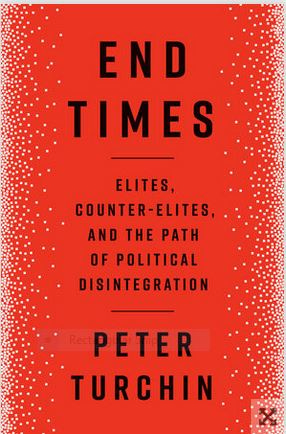
For almost two decades, Peter Turchin has been involved, with many colleagues and co-authors, in an epochal project: to figure out, using quantifiable evidence, what are the forces that lead to the rise, and more importantly, to the decline of nations, political turbulence and decay, and revolutions. This has resulted in the creation of an enormous database (CrisisDB) covering multitude of nations and empires over centuries, and several volumes of Turchin's writings (e.g., Secular Cycles (with Sergey Nefedov), War and Peace and War; I have read the former, not the latter).

End Times is Turchin's attempt to break to the broader public what he has learned from the complex work in the field that he calls Cliodynamics. It is a work of "haute vulgarisation" even if the adjective "haute" is sometimes inapplicable since, in his attempt to reach the broadest possible audience, Turchin has at times stylistically gone much too low assuming almost no prior knowledge amongst his readers. But this is a question of style.

What is the substance? To simplify, in my turn:  Turchin's model of decay has one variable: inequality in income or wealth. That variable which is often adduced as a source of political discord is given a very concrete meaning by Turchin. (Here, I have to mention the often uncomfortable personal experience when people keen to praise my work on inequality would claim that it is important because high inequality leads to social conflict, yet without either them or me being able to pinpoint exactly how it does it. Now, Peter Turchin comes with an explanation).

Rising inequality means by definition that the median-income person will fall further behind the mean-income person, and increasingly behind the top 10% or the top 1 percent. The median-income person could be, as in today's United States (a county to whose analysis most of the book is dedicated), an insufficiently credentialed manufacturing or service sector worker; or it could be a semi-skilled laborer in the 19th century Great Britain, or a small landholder in the 1830s France and 1850s Russia.  Thus, precise occupation or class does not matter: income position does. 

What happens on the top of income distribution? Increased inequality means, again by definition, that people at the top are getting richer compared to the rest, or put differently, that the advantage of being in the top decile or top percentile is increasing. This, as every economist knows, implies that the "demand" for such top slots will go up. If the elite (the top decile or the top percentile) is composed, as in today's US, of executives, investment bankers, corporate lawyers there will be an increasing attempt to study the most lucrative fields and to adopt the type of behavior (including the beliefs) most likely to lead to joining the elite. If more people do so than there are elite positions, a game of empty chairs follows. Not everyone among the aspiring elite will make it. The split in the elite, created by the disappointed would-be elite fighting for top positions, comes next.  

In conditions where (a) the distance between the median and the top goes up (what Turchin calls "immiseration" although it is important to note that this is a relative immiseration; i.e., the median-income person can in real terms become better off), and (b) there is elite overproduction, a pre-revolutionary situation ensues.  Immiseration is not enough. To produce a breakdown, we have to have different elites fighting each other, with one of them enlisting the support of the "people" in order to win.

Even passing knowledge of the backgrounds of the most important revolutions in the modern era shows that Turchin's simple model provides a good fit. Take the French revolution: stagnation of income and recurrent famines occurred simultaneously with a divided elite (aristocracy and part of the clergy against the rising city merchant class); in Russia in 1917, it was one part of aristocracy against another which lost its landholdings and wealth after the abolition of serfdom and could not compensate it with well-paying state jobs. (The statistic of the number of revolutionaries who were themselves, or their families, the impoverished nobles is striking.) Or take the 1979 Iranian revolution: the sidelined clergy against the bourgeois elite, which, like in the Russian case, produced through its offspring the future revolutionaries.

The model fits well—almost too well—the current American reality. The median person is the "deplorable" (to quote Hillary Clinton), a populist (to quote the mainstream media), a Hillbilly (to quote J. D. Vance) or one of the candidates for the deaths of despair (to quote Anne Case and Angus Deaton). The disaffected, disenchanted American lower middle class has been studied extensively after Trump came to power. The current elite, whom Turchin dissects in an almost forensic manner, is composed of CEOs and board directors, large investors, corporate lawyers, "policy-planning network", and top elected officials (p. 203), that is, of all those who have money and who use it to gain voice and power. (Not unexpectedly, Turchin argues that the United States is a plutocracy that uses the tools of the general right to vote as a way to legitimize its power).

But that elite is not monolithic. An aspiring elite ("credential precariat") has been constituted. It has failed so far to reach the top and has ideologically defined itself in opposition to immigration, globalization, "woke" ideology. Turchin argues that this aspiring or would-be elite is in the process of taking over the Republican party and thus creating a political tool for an effective intra-elite competition. This is, of course, resented by the ruling elite that enjoyed an extraordinary good run between 1980 and 2008 as its view of the world (neoliberal capitalism, "credentialism", and identity politics) became espoused by both mainstream parties. Turchin regards the present political struggle in the US as the ruling class trying (desperately) to fend off an assault on its ideology and, more importantly, on its economic position, by an aspiring elite that is enlisting the support of the disaffected middle class.

It seems to be a battle of epic proportions. Many of the pre-revolutionary signs are there: dysfunctional political system, strong interparty splits, lack of political representation for the outsiders. Turchin approvingly quotes the seminal empirical work by Amory Gethin, Clara Martinez Toledano and Thomas Piketty arguing that in all Western democracies, the left-wing or social-democratic parties have become parties of the educated credential elites, while the working and middle classes have lost their influence and even representation.   

Turchin is agnostic—as one should be—regarding what the outcome of the American political crisis will be. The American political system has shown itself to be extraordinary flexible and able to withstand serious shocks. In some ways, one could even think that Trump's various conscious and unconscious "subversions" redounded precisely to the advantage of the system because they showed system's resilience even when the President tried to "overthrow" it. But on the other hand, deep incomprehension and lack of interest in the other side's view is precisely one of the characteristics of pre-revolutionary times and the US has plenty of evidence of this.  

Turchin's model applies to China (not discussed in the book) probably as well as to America. The relative immiseration of the median class has gone on for the past forty years. Indeed, it went hand-in-hand with its phenomenal increase in material well-being, to the clip of almost 10% per year, and is thus less noticeable. At the top end of the distribution, the political/administrative class that has historically ruled China is opposed, still very cautiously, by the rising capitalist/merchant class.  In a paper by Yang, Novokmet and Milanovic, we have documented and analyzed probably the most radical change —short of a revolution—in the composition of the elite ever. That has occurred in China between 1988 and 2013. Economic growth has displaced the administrative class in favor of those linked with the private sector (capitalists).

Turchin's model of internal breakdown thus acquires a geopolitical dimension.  The struggle for global supremacy between the US and China can then be visualized as the question of whose political system will crack first. If China's does, it will have to scale down its foreign ambitions, and accept the role of a subaltern power (to the United States) even in Asia. If the American political system collapses first, the US would move toward isolationism and would have to acquiesce into Chinese rising power in Asia, thus losing controlling role in the most dynamic part of the world.

Will Turchin's model's predictions turn out to be correct? We do not know, but I think, it is important to focus on the logic of the mechanism proposed by Turchin and to see the next couple of decades as a period of difficulties rather than to think, as some people who popularized Turchin's views did in the Summer of 2020, that social processes can be predicted with a precision of movement of celestial bodies.

Turchin's is a fascinating thesis worth reading about, and then either witnessing the chronicle how it unfolds, or perhaps participating in bringing about the outcome or staving it off —because Turchin does show that there the cases when the elite foresight and well-understood self-interest enabled it to ride off the time of troubles.  

PS. A note. "Turchin's model" is based on the Structural-Demographic Theory of social change developed from work by Jack Goldstone (https://en.wikipedia.org/wiki/Structural-demographic_theory); to see how they applied the theory to the current USA, see https://www.noemamag.com/welcome-to-the-turbulent-twenties/."


April 06, 2023

What does it mean to be poor in Serbia?

euractiv.com

What does it mean to be poor in Serbia?

Milena Antonijević

~3 minutes


In Serbia, as in EU countries, poverty is discussed from the aspect of risk, which is 21.2%, according to the latest available data. EURACTIV explores what it means to be poor in Serbia.

A fifth of the population has a monthly income below the poverty threshold, which, according to available data from 2021, amounted to 24,064 dinars, or a little over €200. The group's most vulnerable are the young and those over 65.

"A fifth of the population cannot reach basic life needs. In 2021, the minimum consumer basket amounted to an average of 39,622 dinars. However, the method of measuring income poverty does not include the availability of healthcare, education, and several other services in society," Professor Natalija Perišić, at the Faculty of Political Sciences in Belgrade, told EURACTIV.

Perišić explains that the right to social assistance (NSP), which those who do not have sufficient means of living are eligible for in theory, has been implemented in Serbia for decades. However, it is necessary to fulfil stringent conditions, which is indicated by the fact that the coverage of the population of NSP is 2.9%.

According to the National Employment Service data, at the end of February this year, 429,351 unemployed persons were registered.

"In the last ten years, the number of unemployed has been continuously decreasing," the Ministry of Labour, Employment, Social Affairs and Veteran Affairs told EURACTIV.

Perišić agrees that employment is the best way to fight poverty, which does not mean that employees are not poor.

In the Centers for Social Work, several social services have been developed, especially psycho-social assistance.

The Red Cross coordinates the work of soup kitchens in 77 cities and municipalities in Serbia, and 32,492 meals are prepared and distributed daily.

"From the funds provided in the republican budget, the Red Cross strives to distribute 50,500 servings of aid in the form of family food and hygiene packages to the most vulnerable citizens. Around 125,000 individuals in almost 3,000 populated places receive this help," the Red Cross explains.

The needs of the most vulnerable relate to food, hygiene products, shoes and clothes.

(EURACTIV.rs | Milena Antonijević)


March 24, 2023

Serbia marks 24 years since the beginning of NATO aggression

b92.net

Serbia marks 24 years since the beginning of NATO aggression

8–11 minutes


The order for the attack was issued by Javier Solana, the Secretary General of NATO at the time, to the then commander of the allied forces, US General Wesley Clark, although there was no UN Security Council approval. It was an obvious precedent.

It is estimated that in July 1998, the so-called KLA (Kosovo Liberation Army) controlled approximately 40 percent of Kosovo and Metohija. At that time, there were more than 20,000 people in its composition. During this period, they control rural areas and obstruct roads. Attacks on the police, who were trying to guard traffic routes, important points, facilities and urban environments, happened on a daily basis. The Yugoslav Army was forced to help the police during the unblocking of Dečani in June 1998, and Orahovac in July 1998. By October, the police managed to liberate a number of villages in the central part of the province.

At the same time, there was a harsh campaign against Serbia in the Western media. There was, so to speak, a flood of untrue information about the events in Kosovo and Metohija. In the book "Modern Warfare", Wesley Clark later revealed that the planning of the NATO aggression against the FRY "was well underway in mid-June 1998" and that everything was ready a few months later.

The Council of the North Atlantic Alliance (NATO) on October 12, 1998, made a decision on the adoption of the order for the activation of forces. An agreement between Slobodan Milošević and Richard Holbrooke followed the next day. It is planned to reduce the number of soldiers of the Yugoslav Army in the territory of Kosovo and Metohija to the number from the beginning of 1998. It has been agreed that OSCE observers will monitor the situation, that is, the peace process in Kosovo and Metohija. The agreement also stipulated that no person would be prosecuted in state courts for crimes related to the conflict in Kosovo, except for crimes against humanity and international law.

After the meeting of the NATO Council on January 30, 1999, it was officially announced that NATO was ready to launch strikes against the FRY. The NATO aggression was preceded by insincere offers from the international community, as well as the deployment of additional NATO troops in Albania and Macedonia. Negotiations in Rambouillet were conducted from February 6 to March 19.

The FRY delegation did not sign the final text offered. This was followed by another arrival of Richard Holbrooke in Belgrade on March 22 for negotiations with Slobodan Milošević. The media reported that this last peace attempt also failed.

The level of demands sent to official Belgrade, which was confirmed even by Madeleine Albright, was raised all the time during the so-called negotiations, so that Serbia would be blamed. As interpreted by Vladislav Jovanović, announcements of the bombing had existed for ten years, since the time when Bob Dole promised independence in Pristina. Bill Clinton, the then president of the USA, told the delegation of American Serbs that he would not sign what was offered to Milosevic. A similar view was later expressed by Henry Kissinger.

FRY was attacked as the alleged culprit for the humanitarian disaster in Kosovo and Metohija. The immediate cause, actually the justification, were the events in Račak on January 15. And then the failure of the alleged negotiations conducted in Rambouillet and Paris. In reality, it was support for the terrorist organization of the Kosmet Albanians, the so-called KLA, which by then had already committed numerous crimes.

After the Serbian Parliament confirmed that it does not accept the decision on foreign troops on its territory and proposed that United Nations forces monitor the peace settlement in Kosovo and Metohija, NATO began airstrikes.

According to the first announcement of the General Staff of the Yugoslav Army, on March 24 at around 8:45 p.m., more than twenty objects were targeted in the first raid. The first missiles fell on the barracks in Prokuplje at 19:53. This was followed by an attack on Priština, Kuršumlija, and Batajnica.

On the same evening, US President Bill Clinton announced the need to "demonstrate NATO's seriousness in opposing repression", stressing the need to "intimidate Serbia and Yugoslavia" and "destroy Serbia's military capacities", so that, as he said, "actions against the Kosmet Albanians would not be taken". That same evening, British Prime Minister Tony Blair said that the NATO aggression was undertaken because "the people of Kosovo" asked for it. In order to further clarify that, by "the people of Kosovo" he means Kosmet Albanians.

Nineteen NATO countries began bombing from ships in the Adriatic, as well as from four air bases in Italy. First of all, the anti-aircraft defense and other facilities of the Yugoslav Army were targeted.

According to the data of the Ministry of Defense of Serbia, 2,500 civilians were killed during the NATO air aggression, among them 89 children and 1,031 members of the Army and police. According to the same source, around 6,000 civilians were wounded, of which 2,700 were children, as well as 5,173 soldiers and policemen, and 25 people were missing.

According to Serbian experts, 18,168 air takeoffs were recorded until June 10. According to NATO sources, there were 38,004 air surges, of which 10,484 were fire actions, while the rest were reconnaissance, anti-aircraft, and tankers. At first, around 70 fighter planes took part in the operations daily, and later that number was around 400 on a daily basis.

NATO's war losses in manpower and technology are denied. The then authorities in Belgrade claimed that more than a dozen aircraft were shot down, which was not confirmed. The Russian agency APN announced that NATO had lost over 400 soldiers and over 60 aircraft, while US President Bill Clinton stated in a speech on June 10, 1999 that NATO had suffered "no casualties". Aircraft F-117, F-16, unmanned aerial vehicles, cruise missiles, aircraft F 117, the so-called "invisible" until then symbol of the superiority of American technology, ended up in a field of the Srem village Budjanovci.

There is almost no city in Serbia that was not targeted during the 11 weeks of aggression. NATO carried out 2,300 strikes and dropped 22,000 tons of missiles, including 37,000 banned cluster bombs and those filled with enriched uranium. Apart from attacks from ships in the Adriatic, as well as from four air bases in Italy, operations were carried out from bases in the countries of Western Europe and the USA.

Infrastructure, economic facilities, schools, health institutions, media outlets, cultural monuments, churches and monasteries were destroyed, totaling about 50 percent of Serbia's production capacity. Various data were presented about the material damage caused during the NATO aggression. The then authorities in Belgrade estimated it at approximately one hundred billion dollars, the group of G17 economists estimated the damage at 29.6 billion US dollars.

In the bombing, 25,000 residential buildings were destroyed and damaged, 470 kilometers of roads and 595 kilometers of railways were disabled. 14 airports, 19 hospitals, 20 health centers, 18 kindergartens, 69 schools, 176 cultural monuments and 44 bridges were damaged, while 38 were destroyed.

A third of the country's electricity capacity was destroyed, two refineries in Pancevo and Novi Sad were bombed, and NATO forces used graphite bombs for the first time to disable the electricity system. The overall consequences for the health of the population and the ecological consequences are immeasurable.

The Chinese embassy in Belgrade was destroyed on May 7, 1999. The RTS building in Belgrade was destroyed on April 23. 16 people died and the same number were wounded. The Novi Sad Television building was hit on May 3, 1999, on the International Day of Media Freedom.

The aggression was stopped with the signing of the Military-Technical Agreement in Kumanovo on June 9, 1999, and the withdrawal of FRY forces from Kosovo and Metohija began three days later. The agreement determined the withdrawal of the military security forces of the FRY from Kosovo and Metohija, and the establishment of UNMIK, a United Nations mission.

On June 10, 1999, the Secretary General of NATO issued an order to stop the bombing. The last projectiles fell in the area of the village of Kololeč, not far from Kosovska Kamenica, at 1:30 p.m., and on the barracks in Uroševac around 7:35 p.m. It was the 79th day of the NATO aggression against Serbia, that is, the FRY.

The UN Security Council then adopted Resolution 1244. 37,200 soldiers from 36 countries were deployed and sent to the province as part of the KFOR mission.