June 27, 2024

"The Funeral of Old School Diplomacy"

"The Funeral of Old School Diplomacy"


May 15, 2024
Valdai Club/Literaturnaya Gazeta

Translated by Geoffrey Roberts

Will Russia return to dialogue with the West? Or is humanity sliding from a cold war to a "hot" one? What is the essence of the Ukrainian crisis? Will we arrive at a multipolar world? Can Russia be split by inter-ethnic differences? We talk about these pressing political topics with politologist, Richard Sakwa, the leading British expert on Russia, Emeritus Professor at the University of Kent, and a member of the Valdai international discussion club.

[Continue Reading]

June 21, 2024

Niall Ferguson: We’re All Soviets Now

thefp.com

Niall Ferguson: We're All Soviets Now

Niall Ferguson

22–28 minutes


Bari here.

In the early days of The Free Press, I put together a fantasy roster. Niall Ferguson was at the top of it. Today, I am thrilled to announce that Niall is joining The Free Press as a biweekly columnist.

Niall's résumé is a little much. He has two degrees from Oxford and has taught there as well as at Cambridge, NYU, the London School of Economics, and Harvard. He's now a senior fellow at Stanford's Hoover Institution. 

Given the present state of many of those institutions, you might dismiss Niall as an establishment hack who shapes history to serve the acceptable narrative.

That isn't Niall. Unlike so many of the excellent sheep that enjoy tenure in academe, Niall thinks for himself, a quality you can see on display in any one of his 16 books (and counting), including The Pity of War: Explaining World War I; Kissinger: 1923–1968: The Idealist (part one of a two-part biography); The Square and the Tower; and, most recently, Doom: The Politics of Catastrophe

For this incredible body of work, King Charles just knighted Niall a few days ago.

In recent years, Niall has been one of the most thoughtful and intellectually honest voices in the cultural battle that has engulfed America's most storied institutions—including academia. In an epochal essay he published this past December in The Free Press, "The Treason of the Intellectuals," he argued that "American academia has gone in the opposite political direction—leftward instead of rightward—but has ended up in much the same place" as German academia pre–World War II. "The question is whether we—unlike the Germans—can do something about it."

Niall is doing something. He is one of the founders of the new University of Austin, where I sit on the board alongside him and where, this fall, we will welcome the university's first class. 

Oh, and did I mention that he's married to Ayaan Hirsi Ali? In journalism we call that burying the lede.

Sir Niall's first column is just below. —BW


The witty phrase "late Soviet America" was coined by the Princeton historian Harold James back in 2020. It has only become more apposite since then as the cold war we're in—the second one—heats up.

I first pointed out that we're in Cold War II back in 2018. In articles for The New York Times and National Review, I tried to show how the People's Republic of China now occupies the space vacated by the Soviet Union when it collapsed in 1991. 

This view is less controversial now than it was then. China is clearly not only an ideological rival, firmly committed to Marxism-Leninism and one-party rule. It's also a technological competitor—the only one the U.S. confronts in fields such as artificial intelligence and quantum computing. It's a military rival, with a navy that is already larger than ours and a nuclear arsenal that is catching up fast. And it's a geopolitical rival, asserting itself not only in the Indo-Pacific but also through proxies in Eastern Europe and elsewhere.

But it only recently struck me that in this new Cold War, we—and not the Chinese—might be the Soviets. It's a bit like that moment when the British comedians David Mitchell and Robert Webb, playing Waffen-SS officers toward the end of World War II, ask the immortal question: "Are we the baddies?"

I imagine two American sailors asking themselves one day—perhaps as their aircraft carrier is sinking beneath their feet somewhere near the Taiwan Strait: Are we the Soviets?

Yes, I know what you are going to say. 

There is a world of difference between the dysfunctional planned economy that Stalin built and bequeathed his heirs, which collapsed as soon as Mikhail Gorbachev tried to reform it, and the dynamic market economy that we Americans take pride in. 

The Soviet system squandered resources and all but guaranteed shortages of consumer goods. The Soviet healthcare system was crippled by dilapidated hospitals and chronic shortages of equipment. There was grinding poverty, hunger, and child labor. 


A drunken man lies down at the Kazansky train station buffet in Moscow on January 6, 1992. (Vitaly Armand via Getty Images)

In America today, such conditions exist only in the bottom quintile of the economic distribution—though the extent to which they do exist is truly appalling. Infant mortality in the late Soviet Union was around 25 per 1,000. The figure for the U.S. in 2021 was 5.4, but for single mothers in the Mississippi Delta or Appalachia it is 13 per 1,000. 

The comparison to the Soviet Union, you might argue, is nevertheless risible.

Take a closer look. 

A chronic "soft budget constraint" in the public sector, which was a key weakness of the Soviet system? I see a version of that in the U.S. deficits forecast by the Congressional Budget Office to exceed 5 percent of GDP for the foreseeable future, and to rise inexorably to 8.5 percent by 2054. The insertion of the central government into the investment decision-making process? I see that too, despite the hype around the Biden administration's "industrial policy."

Economists keep promising us a productivity miracle from information technology, most recently AI. But the annual average growth rate of productivity in the U.S. nonfarm business sector has been stuck at just 1.5 percent since 2007, only marginally better than the dismal years 1973–1980.

The U.S. economy might be the envy of the rest of the world today, but recall how American experts overrated the Soviet economy in the 1970s and 1980s.

And yet, you insist, the Soviet Union was a sick man more than it was a superpower, whereas the United States has no equal in the realm of military technology and firepower. 

Actually, no. 

We have a military that is simultaneously expensive and unequal to the tasks it confronts, as Senator Roger Wicker's newly published report makes clear. As I read Wicker's report—and I recommend you do the same—I kept thinking of what successive Soviet leaders said until the bitter end: that the Red Army was the biggest and therefore most lethal military in the world.

On paper, it was. But paper was what the Soviet bear turned out to be made of. It could not even win a war in Afghanistan, despite ten years of death and destruction. (Now, why does that sound familiar?)

On paper, the U.S. defense budget does indeed exceed those of all the other members of NATO put together. But what does that defense budget actually buy us? As Wicker argues, not nearly enough to contend with the "Coalition Against Democracy" that China, Russia, Iran, and North Korea have been aggressively building. 

In Wicker's words, "America's military has a lack of modern equipment, a paucity of training and maintenance funding, and a massive infrastructure backlog. . . . it is stretched too thin and outfitted too poorly to meet all the missions assigned to it at a reasonable level of risk. Our adversaries recognize this, and it makes them more adventurous and aggressive."

And, as I have pointed out elsewhere, the federal government will almost certainly spend more on debt service than on defense this year. 

It gets worse. 

According to the CBO, the share of gross domestic product going on interest payments on the federal debt will be double what we spend on national security by 2041, thanks partly to the fact that the rising cost of the debt will squeeze defense spending down from 3 percent of GDP this year to a projected 2.3 percent in 30 years' time. This decline makes no sense at a time when the threats posed by the new Chinese-led Axis are manifestly growing.

Even more striking to me are the political, social, and cultural resemblances I detect between the U.S. and the USSR. Gerontocratic leadership was one of the hallmarks of late Soviet leadership, personified by the senility of Leonid Brezhnev, Yuri Andropov, and Konstantin Chernenko. 


Visitors walk through the courtyard to visit the Winter Palace courtyard in Leningrad, now known as Saint Petersburg, in November 1983. (Mikki Ansin via Getty Images)

But by current American standards, the later Soviet leaders were not old men. Brezhnev was 75 when he died in 1982, but he had suffered his first major stroke seven years before. Andropov was only 68 when he succeeded Brezhnev, but he suffered total kidney failure just a few months after taking over. Chernenko was 72 when he came to power. He was already a hopeless invalid, suffering from emphysema, heart failure, bronchitis, pleurisy, and pneumonia.

It is a reflection of the quality of healthcare enjoyed by their American counterparts today that they are both older and healthier. Nevertheless, Joe Biden (81) and Donald Trump (78) are hardly men in the first flush of youth and vitality, as The Wall Street Journal recently made cringe-inducingly clear. The former cannot distinguish between his two Hispanic cabinet secretaries, Alejandro Mayorkas and Xavier Becerra. The latter muddles up Nikki Haley and Nancy Pelosi. If Kamala Harris has never watched The Death of Stalin, it's not too late.

Another notable feature of late Soviet life was total public cynicism about nearly all institutions. Leon Aron's brilliant book Roads to the Temple shows just how wretched life in the 1980s had become. 

In the great "return to truth" unleashed by Gorbachev's policy of glasnost, Soviet citizens were able to pour forth their discontents in letters to a suddenly free press. Some of what they wrote about was specific to the Soviet context—in particular, the revelations about the realities of Soviet history, especially the crimes of the Stalin era. But to reread Russians' complaints about their lives in the 1980s is to come across more than a few eerie foreshadowings of the American present.

In a letter to Komsomolskaya Pravda from 1990, for example, a reader decried the "ghastly and tragic. . . loss of morality by a huge number of people living within the borders of the USSR." Symptoms of moral debility included apathy and hypocrisy, cynicism, servility, and snitching. The entire country, he wrote, was suffocating in a "miasma of bare-faced and ceaseless public lies and demagoguery." By July 1988, 44 percent of people polled by Moskovskie novosti felt that theirs was an "unjust society."

Look at the most recent Gallup surveys of American opinion and one finds a similar disillusionment. The share of the public that has confidence in the Supreme Court, the banks, public schools, the presidency, large technology companies, and organized labor is somewhere between 25 percent and 27 percent. For newspapers, the criminal justice system, television news, big business, and Congress, it's below 20 percent. For Congress, it's 8 percent. Average confidence in major institutions is roughly half what it was in 1979.


A man reads the Russian newspaper Pravda, publicly displayed on the walls of a Moscow building during the Gorbachev era. (Bernard Bisson via Getty Images)

It is now well known that younger Americans are suffering an epidemic of mental ill health—blamed by Jon Haidt and others on smartphones and social media—while older Americans are succumbing to "deaths of despair," a phrase made famous by Anne Case and Angus Deaton. And while Case and Deaton focused on the surge in deaths of despair among white, middle-aged Americans—their work became the social-science complement to J.D. Vance's Hillbilly Elegymore recent research shows that African Americans have caught up with their white contemporaries when it comes to overdose deaths. In 2022 alone, more Americans died of fentanyl overdoses than were killed in three major wars: Vietnam, Iraq, and Afghanistan.

The recent data on American mortality are shocking. Life expectancy has declined in the past decade in a way we do not see in comparable developed countries. The main explanations, according to the National Academies of Sciences, Engineering, and Medicine, are a striking increase in deaths due to drug overdoses, alcohol abuse, and suicide, and a rise in various diseases associated with obesity. To be precise, between 1990 and 2017 drugs and alcohol were responsible for more than 1.3 million deaths among the working-age population (aged 25 to 64). Suicide accounted for 569,099 deaths—again of working-age Americans—over the same period. Metabolic and cardiac causes of death such as hypertension, type 2 diabetes, and coronary heart disease also surged in tandem with obesity. 

This reversal of life expectancy simply isn't happening in other developed countries. 

Peter Sterling and Michael L. Platt argue in a recent paper that this is because West European countries, along with the United Kingdom and Australia, do more to "provide communal assistance at every stage [of life], thus facilitating diverse paths forward and protecting individuals and families from despair." In the United States, by contrast, "Every symptom of despair has been defined as a disorder or dysregulation within the individual. This incorrectly frames the problem, forcing individuals to grapple on their own," they write. "It also emphasizes treatment by pharmacology, providing innumerable drugs for anxiety, depression, anger, psychosis, and obesity, plus new drugs to treat addictions to the old drugs."

Obese? Try Ozempic.

The mass self-destruction of Americans captured in the phrase deaths of despair for years has been ringing a faint bell in my head. This week I remembered where I had seen it before: in late Soviet and post–Soviet Russia. While male life expectancy improved in all Western countries in the late twentieth century, in the Soviet Union it began to decline after 1965, rallied briefly in the mid-1980s, and then fell off a cliff in the early 1990s, slumping again after the 1998 financial crisis. The death rate among Russian men aged 35 to 44, for example, more than doubled between 1989 and 1994. 

The explanation is as clear as Stolichnaya. In July 1994, two Russian scholars, Alexander Nemtsov and Vladimir Shkolnikov, published an article in the national daily newspaper Izvestia with the memorable title "To Live or to Drink?" Nemtsov and Shkolnikov demonstrated (in the words of a recent review article) "an almost perfect negative linear relationship between these two indicators." All they were missing was a sequel—"To Live or to Smoke?"—as lung cancer was the other big reason Soviet men died young. A culture of binge drinking and chain-smoking was facilitated by the dirt-cheap prices of cigarettes under the Soviet regime and the dirt-cheap prices of alcohol after the collapse of communism. 

The statistics are as shocking as the scenes I remember witnessing in Moscow and St. Petersburg in the late 1980s and early 1990s, which made even my native Glasgow seem abstemious. An analysis of 25,000 autopsies conducted in Siberia in 1990–2004 showed that 21 percent of adult male deaths due to cardiovascular disease involved lethal or near-lethal levels of ethanol in the blood. Smoking accounted for a staggering 26 percent of all male deaths in Russia in 2001. Suicides among men aged 50 to 54 reached 140 per 100,000 population in 1994—compared with 39.2 per 100,000 for non-Hispanic American men aged 45 to 54 in 2015. In other words, Case and Deaton's deaths of despair are a kind of pale imitation of the Russian version 20 to 40 years ago. 

The self-destruction of homo sovieticus was worse. And yet is not the resemblance to the self-destruction of homo americanus the really striking thing?

Of course, the two healthcare systems look superficially quite different. The Soviet system was just under-resourced. At the heart of the American healthcare disaster, by contrast, is a huge mismatch between expenditure—which is internationally unrivaled relative to GDP—and outcomes, which are terrible. But, like the Soviet system as a whole, the U.S. healthcare system has evolved so that a whole bunch of vested interests can extract rents. The bloated, dysfunctional bureaucracy, brilliantly parodied by South Park in a recent episode—is great for the nomenklatura, lousy for the proles.

Meanwhile, as in the late Soviet Union, the hillbillies—actually the working class and a goodly slice of the middle class, too—drink and drug themselves to death even as the political and cultural elite double down on a bizarre ideology that no one really believes in. 


Muscovites queue at a liquor store to buy wine, limited to two bottles per person, on May 29, 1990. (Janek Skarzynski via Getty Images)

In the Soviet Union, the great lies were that the Party and the state existed to serve the interests of the workers and peasants, and that the United States and its allies were imperialists little better than the Nazis had been in "the great Patriotic War." The truth was that the nomenklatura (i.e., the elite members) of the Party had rapidly formed a new class with its own often hereditary privileges, consigning the workers and peasants to poverty and servitude, while Stalin, who had started World War II on the same side as Hitler, utterly failed to foresee the Nazi invasion of the Soviet Union, and then became the most brutal imperialist in his own right.

The equivalent falsehoods in late Soviet America are that the institutions controlled by the (Democratic) Party—the federal bureaucracy, the universities, the major foundations, and most of the big corporations—are devoted to advancing hitherto marginalized racial and sexual minorities, and that the principal goals of U.S. foreign policy are to combat climate change and (as Jake Sullivan puts it) to help other countries defend themselves "without sending U.S. troops to war."

In reality, policies to promote "diversity, equity, and inclusion" do nothing to help poor minorities. Instead, the sole beneficiaries appear to be a horde of apparatchik DEI "officers." In the meantime, these initiatives are clearly undermining educational standards, even at elite medical schools, and encouraging the mutilation of thousands of teenagers in the name of "gender-affirming surgery."

As for the current direction of U.S. foreign policy, it is not so much to help other countries defend themselves as to egg on others to fight our adversaries as proxies without supplying them with sufficient weaponry to stand much chance of winning. This strategy—most visible in Ukraine—makes some sense for the United States, which discovered in the "global war on terror" that its much-vaunted military could not defeat even the ragtag Taliban after twenty years of effort. But believing American blandishments may ultimately doom Ukraine, Israel, and Taiwan to follow South Vietnam and Afghanistan into oblivion. 

As for climate change, the world is now awash in Chinese electric vehicles, batteries, and solar cells, all mass-produced with the help of state subsidies and coal-burning power stations. At least we tried to resist the Soviet strategy of unleashing Marxism-Leninism on the Third World, the human cost of which was almost incalculable. Our policy elite's preoccupation with climate change has resulted in utter strategic incoherence by comparison. The fact is that China has been responsible for three-quarters of the 34% increase in carbon dioxide emissions since Greta Thunberg's birth (2003), and two-thirds of the 48% increase in coal consumption.

To see the extent of the gulf that now separates the American nomenklatura from the workers and peasants, consider the findings of a Rasmussen poll from last September, which sought to distinguish the attitudes of the Ivy Leaguers from ordinary Americans. The poll defined the former as "those having a postgraduate degree, a household income of more than $150,000 annually, living in a zip code with more than 10,000 people per square mile," and having attended "Ivy League schools or other elite private schools, including Northwestern, Duke, Stanford, and the University of Chicago." 

Asked if they would favor "rationing of gas, meat, and electricity" to fight climate change, 89 percent of Ivy Leaguers said yes, as against 28 percent of regular people. Asked if they would personally pay $500 more in taxes and higher costs to fight climate change, 75 percent of the Ivy Leaguers said yes, versus 25 percent of everyone else. "Teachers should decide what students are taught, as opposed to parents" was a statement with which 71 percent of the Ivy Leaguers agreed, nearly double the share of average citizens. "Does the U.S. provide too much individual freedom?" More than half of Ivy Leaguers said yes; just 15 percent of ordinary mortals did. The elite were roughly twice as fond as everyone else of members of Congress, journalists, union leaders, and lawyers. Perhaps unsurprisingly, 88 percent of the Ivy Leaguers said their personal finances were improving, as opposed to one in five of the general population. 


A food shop clerk standing by empty display counters amid shortages and economic reform price hikes in political turmoil–beset Moscow, USSR. (Sergei Guneyev via Getty Images)

A bogus ideology that hardly anyone really believes in, but everyone has to parrot unless they want to be labeled dissidents—sorry, I mean deplorables? Check. A population that no longer regards patriotism, religion, having children, or community involvement as important? Check. How about a massive disaster that lays bare the utter incompetence and mendacity that pervades every level of government? For Chernobyl, read Covid. And, while I make no claims to legal expertise, I think I recognize Soviet justice when I see—in a New York courtroom—the legal system being abused in the hope not just of imprisoning but also of discrediting the leader of the political opposition.

The question that haunts me is: What if China has learned the lessons of Cold War I better than we have? I fear that Xi Jinping has not only understood that, at all costs, he must avoid the fate of his Soviet counterparts. He has also, more profoundly, understood that we can be maneuvered into being the Soviets ourselves. And what better way to achieve that than to "quarantine" an island not too far from his coastline and then defy us to send a naval expedition to run the blockade, with the obvious risk of starting World War III? The worst thing about the approaching Taiwan Semiconductor Crisis is that, compared with the Cuban Missile Crisis of 1962, the roles will be reversed. Biden or Trump gets to be Khrushchev; XJP gets to be JFK. (Just watch him prepping the narrative, telling European Commission President Ursula von der Leyen that Washington is trying to goad Beijing into attacking Taiwan.)

We can tell ourselves that our many contemporary pathologies are the results of outside forces waging a multi-decade campaign of subversion. They have undoubtedly tried, just as the CIA tried its best to subvert Soviet rule in the Cold War. 

Yet we also need to contemplate the possibility that we have done this to ourselves—just as the Soviets did many of the same things to themselves. It was a common liberal worry during the Cold War that we might end up becoming as ruthless, secretive, and unaccountable as the Soviets because of the exigencies of the nuclear arms race. Little did anyone suspect that we would end up becoming as degenerate as the Soviets, and tacitly give up on winning the cold war now underway.

I still cling to the hope that we can avoid losing Cold War II—that the economic, demographic, and social pathologies that afflict all one-party communist regimes will ultimately doom Xi's "China Dream." But the higher the toll rises of deaths of despair—and the wider the gap grows between America's nomenklatura and everyone else—the less confident I feel that our own homegrown pathologies will be slower-acting. 

Are we the Soviets? Look around you.


Niall Ferguson's latest book is Doom. Follow him on X @nfergus.

And to support our work, become a Free Press subscriber today:

The Free Press earns a commission from any purchases made through Bookshop.org links in this article.


June 13, 2024

"Kosovo is not independent, nor will it ever be": PM Vucevic asks key question

telegraf.rs

"Kosovo is not independent, nor will it ever be": PM Vucevic asks key question

Dragica Ranković

2–3 minutes


Vucevic told RTS that Serbia is asking all those who consider that issue to have been resolved - if that is the case, then why pressure Serbia

Printscreen: RTS

Serbian Prime Minister Milos Vucevic says that Belgrade is ready for dialogue with Pristina and that the government in Belgrade is always involved in the dialogue through its Office for Kosovo and Metohija.

Vucevic told RTS that Serbia is asking all those who consider that issue to have been resolved - if that is the case, then why pressure Serbia.

"For some big players in the international environment, Kosovo and Metohija is a done deal, and for others, of course, it is not. But also as far as those for whom the issue of Kosovo and Metohija has been resolved, if that is the case, then why put pressure on Serbia," asked Vucevic.

He stressed that as far as he is concerned Kosovo is not independent, nor will it ever be.

"It cannot be until the Serbian side says that it is," stressed the prime minister of Serbia.

He added that he considers what Kosovo Prime Minister Albin Kurti is doing on the ground is a much bigger problem.

"He is using this moment and has support to carry out terror against Serbs in Kosovo and Metohija, primarily in the north. Our task and goal is to support Serbs in Kosovo and Kosovo in accordance with (UN Security Council) Resolution 1244," said Vucevic.

According to him, Belgrade must defend Serbs in Kosovo and Metohija, instead of "coming out with cheap sloganeering."

"Bosnia and Herzegovina is the most complex issue in the Western Balkans, and Kosovo is a difficult issue for Serbs and Albanians, who had different historical frameworks, solutions, moments when one or the other side was better off or dominated," stated Vucevic.

The prime minister pointed out that Belgrade leads a responsible and wise policy and that he considers this to be an advantage.

(Telegraf.rs/Tanjug)


June 04, 2024

Jeffrey D. Sachs: How Close Are We To ‘Midnight?’

How Close Are We To 'Midnight?'


May 30, 2024


By Jeffrey D. Sachs

The overriding job of any U.S. president is to keep the nation safe. In the nuclear age, that mainly means avoiding nuclear Armageddon. 

Joe Biden's reckless and incompetent foreign policy is pushing us closer to annihilation. He joins a long and undistinguished list of presidents who have gambled with Armageddon, including his immediate predecessor and rival, Donald Trump. 

[Continue Reading]


May 30, 2024

DW | Serbia local elections: Can the opposition break through?

dw.com

Serbia local elections: Can the opposition break through?

Sanja Kljajic

8–10 minutes


A few solitary election billboards and stands are the only indications that local elections are taking place this weekend in the city of Novi Sad in northern Serbia. The scene is similar in the southern Serbian city of Nis, where residents say they cannot recall such a quiet election campaign.

Nevertheless, public sentiment suggests that the opposition may have a chance of defeating the ruling Serbian Progressive Party (SNS) of President Aleksandar Vucic in both cities.

"I believe the expectations are partially justified," Dusko Radosavljevic, a political scientist from Novi Sad, told DW. "In these major centers in Serbia, the opposition has to a certain extent united and become visible. But even if the opposition itself is not highly visible, the negative effects of the current harmful government are."

Dusko Spasojevic, a political scientist from Belgrade, shares this view but says that it is hard to make predictions because there is less enthusiasm now than there was in the run-up to the parliamentary election on December 17.

Serbian voters go to the polls on Sunday to elect representatives to 88 local assembliesImage: Jelena Djukic Pejic/DW

"It seems that there is hope for the opposition parties, primarily based on the results of the parliamentary elections, which serve as a good indicator," he told DW, pointing to the fact that the opposition list came first in most polling stations in Novi Sad. "What is particularly interesting is that for the first time in quite a while, we have open and competitive elections, which might draw out voters who have not participated before."

Recent election irregularities

The upcoming local elections are taking place after months of opposition efforts to highlight irregularities in both the national parliamentary and Belgrade local elections last December.

Several election observers concluded that these elections were neither free nor fair. The Center for Research, Transparency and Accountability (CRTA), an independent, non-partisan civil society organization, stated in its final report that "The spectrum of severe threats to voters' and candidates' rights includes unscrupulous pressure on citizens, manipulation of the voter registry, forgery of support signatures for nominated lists, misuse of citizens' personal data, and the falsification of the election results publication date in the Official Gazette to prevent the opposition from utilizing the legal deadline for submitting complaints to the Constitutional Court."

Thousands of people gathered in Belgrade last December to protest what election observers said were widespread irregularities in the country's general election. The banner here reads 'We don't agree' Image: Darko Vojinovic/AP/picture alliance

These findings were backed up by the final report of the OSCE's Office for Democratic Institutions and Human Rights

. This led the European Parliament to call for an international investigation.

Electoral law amendments since December

Although no international investigation was ever launched, the reports of irregularities led to negotiations on electoral conditions between the government and the opposition. As a result, electoral law was amended to prevent the organized practice of temporarily moving voters' registered addresses to other constituencies to influence election results.

"This is a step in the right direction, but it's certainly not enough," Radomir Lazovic of the opposition Green-Left Front told DW. "A Voters' Register Commission needs to be established, and the media's approach to the opposition must change."

Opposition split

Because the opposition's demands were not fully met, the once-united opposition had to decide whether to participate in the elections at all. The debate led to a split in the opposition Serbia Against Violence alliance. One side formed a new group, I Choose to Fight, which will run in all local elections. The other side opted for a boycott.

President Aleksandar Vucic (pictured in the center of this election campaign poster) will hold a large SNS rally in the Serbian city of Nis on the final day of the local election campaignImage: Ivan Djerkovic/DW

"It seems that while the united opposition was pushing for changes in electoral conditions, the pressure on the government was greater, and there were indications that progress could be made," said Lazovic, who is part of the I Choose to Fight group. "But after part of the opposition decided to boycott the elections, this pressure decreased, and the government now feels less compelled to make further concessions."

"For us, participating in the elections is a surrender, playing the game on their terms, and that's the main disagreement," said Marinika Tepic, vice president of the Party of Freedom and Justice, which opted for a boycott.

While this boycott primarily relates to the re-run of last December's local election in Belgrade, all local branches of these parties are allowed to decide for themselves whether to participate in the elections.

Opposition confident in Novi Sad

The broadest opposition coalition was formed in Novi Sad, uniting 12 parties and movements. They believe that despite all the irregularities, they can defeat the ruling SNS.

"I think it's naive for our colleagues in Novi Sad to believe they can win under these conditions," said Tepic. "They won't win; they will face a reprise of December 17, or an even worse result."

Miran Pogacar of the United for a Free Novi Sad alliance disagrees: "We expect Novi Sad to be the first truly free city in Serbia. But a victory in Novi Sad is a victory for all of Serbia, and we hope the same will happen in other cities, like Nis, where there is a real possibility for change, to initiate changes across the country."

Igor Novakovic of the Socialist Party of Serbia, which is in coalition with the SNS, is confident that the ruling parties will emerge strongest from the upcoming election in NisImage: Jelena Djukic Pejic/DW

There is the possibility of change in smaller towns as well, but some feel that these elections will be a repeat of what happened in December. In the town of Bac near Novi Sad, for example, local leaders were filmed unloading aid packages, which the opposition assumes contains basic foodstuffs and claims will be distributed in Bac before the elections in an attempt to buy votes for the ruling SNS.

Voter turnout will be key

A quiet campaign and heated debate over the boycott have overshadowed discussions about party policies and programs. Political scientist Dusko Spasojevic believes this could mean that some voters will stay at home on Sunday. "I think this debate has really confused the Serbia Against Violence voters, and it remains to be seen how they will react," he said.

Adding to the confusion, he said, is the makeup of some of the coalitions and uncertainty among voters about where the opposition is boycotting the elections and where it isn't.

To make matters worse, citizen group lists have appeared with names similar to opposition lists in numerous municipalities. "The aim of these phantom lists is to further confuse voters, and I believe that in all this confusion, some votes will be cast in error," said Spasojevic.

While the opposition is pinning its hopes on high voter turnout, the ruling SNS is leaving nothing to chance: President Aleksandar Vucic will hold a large SNS rally in Nis on the final day of the campaign.

Is this an indication that the SNS is rattled and fears losing? Igor Novakovic of the Socialist Party of Serbia, which is in coalition with the SNS, is confident that there will be no surprises. And if there are, he claims it will only be the citizens of Nis who will suffer.

"The opposition's proposals depend on the government of the Republic of Serbia, because the city doesn't have the money to finance them. And what will happen if the opposition wins in Nis while the Serbian government remains in power for the next four years? How will Nis develop without alignment between the city and the national government? I'm not threatening or trying to scare anyone, but that's the electoral and political system," he said.

Edited by: Aingeal Flanagan


May 29, 2024

Aleksandar Raković: Serbia and the Republic of Srpska: Is a Common Future Possible.?

valdaiclub.com

Serbia and the Republic of Srpska: Is a Common Future Possible.?

Aleksandar Raković

8–11 minutes


If Serbia had joined the anti-Russian sanctions, it would have lost Russia as an ally in international forums. Apart from Russia, no one else would have so strongly represented the just views of the Serbian people regarding the Western occupation of Kosovo and Metohija and Bosnia and Herzegovina as an imprisoned Western protectorate or even a colony. Russia has influence on the countries of the free world, which do not accept Euro-Atlantic hegemony.

After the start of Russia's special military operation in Ukraine, Western pressure on the Republic of Serbia, the Republic of Srpska and all Serbian people on the territory of the former Yugoslavia increased. The fact that the Republic of Serbia has not imposed sanctions against the Russian Federation has contributed especially to renewed Western political violence against Serbia. Serbs have been put at risk because the Republic of Serbia and the Republic of Srpska have refused to align themselves with the Western policy against Russia.

At this moment, the political West worked in a coordinated manner on two tracks: to accept so-called independent Kosovo into the Council of Europe and to adopt a resolution in the General Assembly of the United Nations on the so-called Srebrenica genocide, in order to place collective guilt on the Orthodox Christian Serbs. If the Serbian people were to be stigmatized as genocidal, it would open the door to the process of abolishing the Republic of Srpska, as well as further hijacking the southern Serbian province of Kosovo and Metohija from the Republic of Serbia.

In both cases, Berlin, Brussels, London and Washington play the alleged card of support for the Muslim population in Kosovo and Bosnia and Herzegovina, but only in order to throw dust in the eyes of Muslims around the world. Namely, at the same time, the politicians of the West provide support to Israel in its war against the Muslim population in Gaza. Therefore, the West wants to divide Orthodox Christians and Muslims, to impose collective guilt on the Serbian people, and to establish Western dominance over others by sowing the seed of discord within the United Nations. 

The West needs more occupied territories, more protectorates, more colonies. While Kosovo and Metohija is occupied by NATO, Bosnia and Herzegovina is a Western protectorate which looks more and more like a modern colony. Westerners gave the so-called High Representative in Bosnia-Herzegovina the right to replace and punish political figures, as well as to impose laws and decisions that would harm the local population. Serbs and Croats are openly arguing for the abolition of this Western stick of power. At the same time Russia and China don't recognise the so-called High Representative in Bosnia and Herzegovina.

The majority of Bosniak Muslims have assented to being a Western tool. Bosniak leaders believe that it allows them to preserve the favour of the Euro-Atlantic imperialists amid a time of increased Western Islamophobia. Also, Bosniak politicians, as subjects of the West, see a chance to establish Bosniak hegemony over the Serbs and Croats in the imposed protectorate of Bosnia and Herzegovina.

Asia and Eurasia

Russians no longer have any illusion that a unified Europe can be created from Iceland to Kamchatka. That certainly wonʼt happen. The post-Christian West sees neither cooperation nor brotherhood with Orthodox Christians or Muslims.  

Opinions

However, when it is not possible to remove Western chains in Bosnia and Herzegovina, because Sarajevo will not do it, then Serbs should focus on ways to free the Republic of Srpska from an unnecessary burden. The Serbian people, as a mature and state-building nation, should make the decision regarding the future of the Republic of Srpska. Therefore, the Republic of Srpska, in exercising its right to self-determination, would find a way to freedom, a way that would permanently remove the chains. It would be helpful for all three ethnicities within Bosnia and Herzegovina. The Croats see that, but the Bosniaks don't.

The regular state for the Serbian people is the one that was established in 1918, when and where the Serbs unified into one country. However, time and events have shown that the Serbian unification within a Yugoslav framework was not good. Thus, any Serbian reunification must be only within a pan-Serbian framework.

The destruction of the Yugoslav state – the Socialist Federal Republic of Yugoslavia (1991/1992) and the Federal Republic of Yugoslavia (2006) – imposed boundaries within the united and indivisible Serbian nation. The Serbian people must not accept such borders. Therefore, Serbs should interpret the current situation as an irregular state and consider solutions that would lead to re-establishment of a regular state.

The national interest of the Serbian people should be the unification of the Republic of Serbia and the Republic of Srpska into a single state. That state could be called the Federal Republic of Serbia; it would consist of the Republic of Serbia and the Republic of Srpska. Montenegro would also logically have a place within the reunified Serbian state – in accordance with the vision of Montenegrin Metropolitan Petar II Petrović Njegoš – published in his pan-Serbian ethnic Bible – "of Serbia the whole, from the Danube River to the deep blue sea"  . Therefore, there is a solution for each Serbian state to preserve its institutions within the common all-Serbian state. 

This common future for Serbia, the Republic of Srpska as well as Montenegro is possible. It would arrive and would be based on a new and righteous world order. The contours of that world order we already see. It depends on the success of Russia's special military operation in Ukraine. 

It is important to mention that the Serbian people link a righteous solution to the reintegration of Odessa into the Russian Federation and the establishment of a Russian border on the Danube. In that case, Russia and Serbia would be connected by the Danube as an international waterway.

Finally, the question arises whether the latest Western attacks on the Republic of Serbia and the Republic of Srpska in the Council of Europe and the United Nations would have happened if Serbia had imposed sanctions on the Russian Federation and joined the orchestrated anti-Russian hysteria. Of course, the same attacks would happen, because the West has to justify its aggression and destruction of Yugoslavia. Also, the German political elite wants to impose a genocidal stigma on someone else at any cost, in order to amnesty Germany for the genocide it committed in the Second World War. Germany decided that the stigma of collective guilt should be placed on the Serbian people.

If Serbia had joined the anti-Russian sanctions, it would have lost Russia as an ally in international forums. Apart from Russia, no one else would have so strongly represented the just views of the Serbian people regarding the Western occupation of Kosovo and Metohija and Bosnia and Herzegovina as an imprisoned Western protectorate or even a colony. Russia has influence on the countries of the free world, which do not accept Euro-Atlantic hegemony.

Norms and Values

Aleksandar Raković

Almost the entire Serbian population, throughout the former Yugoslavia, has taken a pro-Russian position. In the internal political struggle of Serbia and the Republic of Srpska, there is no Russophobic sentiment at all, even within the ranks of pro-Western parties, writes Aleksandar Raković.

Opinions

Views expressed are of individual Members and Contributors, rather than the Club's, unless explicitly stated otherwise.


May 24, 2024

For them, he is "awesome machine", for us, the greatest son of Serbia; Incredible success of Vučić in New York

b92.net

For them, he is "awesome machine", for us, the greatest son of Serbia; Incredible success of Vučić in New York

Novosti

10–13 minutes


Even Zlatko Lagumdžija acknowledged Serbian President Aleksandar Vučić for his energy and strength in the fight against the Resolution on Srebrenica.

The Permanent Representative of Sarajevo to the UN admitted to FTV that he had never in his life faced an opponent or, as he stated more precisely, an "awesome machine", which invested so much energy and strength to reduce the influence of the main sponsors, co-sponsors and other Euro-Atlantic allies.

Also, some stated that Aleksandar Vučić is an "awesome machine", but, as it was published on social networks, for the Serbian people he is "one of its greatest sons. With his feat in New York, Vučić wrote the proudest pages of our history".

In addition, Lagumdžija also referred to the move of President Vučić, who draped himself in the Serbian tricolor in the middle of the UN General Assembly, and as he said, this had never been seen before.

President Vučić sacrificed himself for his people and country. We are not interested in how the "awesome machine" Vučić will end up in the history of those he defeated, because what is important is that he will end up in Serbian history as one of its greatest sons, according to Novosti.


May 19, 2024

Kushner project on site of NATO bombings in Serbia draws protest

inman.com

Kushner project on site of NATO bombings in Serbia draws protest

by Ben Verde May 17, 2024 SHARE

3–4 minutes


At Inman Connect Las Vegas, July 30-Aug. 1 2024, the noise and misinformation will be banished, all your big questions will be answered, and new business opportunities will be revealed. Join us.

A planned real estate development in Serbia by Jared Kushner's company has drawn opposition from local groups, according to news reports.

The Serbian government signed a deal with a Kushner-affiliated development company earlier this week that will allow them to redevelop the former headquarters of the Serbian army in Belgrade, which was destroyed by a United States-led NATO bombing campaign in 1999, the Associated Press reported. The planned development will feature a high-rise hotel, a luxury apartment complex, office spaces and shops.

"The economic progress in Serbia over the past decade has been impressive," the son-in-law of former President Donald Trump said in a statement. "This development will further elevate Belgrade into the premier international destination it is becoming."

While the government has cheered on the deal, opposition groups have spoken out against it, as have members of the general public. Many see the bombed-out former army headquarters as a symbol of Serbian resistance to "NATO aggression," according to the Associated Press. 

Among the opposition groups is Ecological Uprising, the leader of which, Aleksandar Jovanović, said  "will use all means, including physical" to prevent the demolition of the former army headquarters and the handover of the site to an American company.

"The moment the first bulldozers appear, we will be waiting for them," Jovanović said at a press conference, according to the AP.

Jovanović called on members of the Serbian public to join him in the blockade, especially members of the Serbian Armed Forces, and "all those who have the courage to defend the old General Staff and not allow this crime to happen."

Government officials have defended the deal and framed it as part of the reinvigoration of Belgrade.

"We will restore the building 25 years after it was destroyed in the bombing," construction minister Goran Vesić said, according to the AP. "For a quarter of a century, no one, before this Government, had thought to rebuild the complex. When this space is revitalized, it will contribute to the development of Belgrade and Serbia."

A memorial to the NATO bombings will be built at the site, financed by the developer, according to the report.

The Serbian project is one of multiple foreign real estate deals Kushner has pursued in recent months, which have raised eyebrows due to his father-in-law's presidential candidacy and Kushner's former role in the Trump White House. In addition to the Serbian project, he is also seeking to develop several hotels and hundreds of villas on the Zvërnec peninsula in Albania.

Email Ben Verde


May 13, 2024

The Spectator’s : Why Serbia is becoming China’s best friend in Europe

thespectator.com

Why Serbia is becoming China's best friend in Europe

Tatyana Kekic

4–5 minutes


In a statement published Tuesday in Serbia's leading daily newspaper Politika, Xi said that China's friendship with Serbia "is soaked in the shared blood of the two nations." There were rumblings that he would take the opportunity to visit the former embassy, now a China Cultural Center, to pay his respects to the dead and make a political point — that NATO is not a purely defensive alliance, and that China is far stronger now than it was then.

Since Xi's previous visit to Serbia in 2016, relations between the two countries have intensified, with China emerging as Serbia's primary economic partner. China is the single largest investor in Serbia, and its second largest trade partner after the European Union. Last October, the two countries signed a free trade agreement, making Serbia China's first free-trade partner in central and eastern Europe.

Chinese investment in Serbia, which accounts for around a third of the country's total foreign direct investment, is concentrated in mining and manufacturing. Zijin Mining and Serbia Zijin Copper are now the second and third most profitable companies in Serbia. Chinese companies have also been involved in major infrastructure projects in Serbia, such as the Belgrade to Novi Sad high-speed railway and the Miloš the Great highway.

It is obvious why China is an important partner for Serbia — it has invested billions in the country and has been a bulwark against the international recognition of Kosovo at the United Nations. It might be less clear, however, why Serbia is important for China. China's trade with Serbia is less than one-fortieth of its trade with Germany — and yet it has chosen to visit Belgrade not Berlin.

For China, Serbia is a rare friend in Europe, and one which shares its worldview. Both countries sacralize state sovereignty and territorial integrity in international law. While China has always opposed Kosovo's independence, Vučić has been clear on his position on Taiwan. "Taiwan is China. And it's up to you, what, when, how you're going to do it," he said in a recent interview. 

China also sees Serbia as a gateway to Europe. As an EU candidate state, Serbia could become a conduit through which China could enter the European market. And by occupying a strategic position in the western Balkans, Serbia plays an important role in China's Belt and Road Initiative, connecting the Greek port of Piraeus, run by China's Cosco Shipping, to Hungary in the north.

Serbia's courting of China does raise questions about Belgrade's commitment to EU accession. But after waiting to join the EU for more than two decades, Serbia has little to lose here. The sluggish accession talks and constant moving targets mean Serbia has been forced to look elsewhere to develop its economy and increase growth.

As the governor of the National Bank of Serbia recently remarked, "this waiting room is turning into captivity." Instead of waiting around doing nothing, Serbia has "dared to have its own path and to be different." Since 2009, Serbia has pursued a foreign policy which balances its relations between the US, EU, Russia and China.

Much like the former Yugoslavia, Serbia insists on its right to pursue an independent foreign policy. Serbia has refused to distance itself from Russia since its invasion of Ukraine in February 2022, and has continued to seek economic opportunities and diplomatic support from China.

So far this strategy has not served Serbia badly.

Serbia's growth rate is among the highest in Europe (its estimated GDP was 4.6 percent for the first quarter of 2024), and its public debt to GDP ratio is among the lowest (and projected to decline to around 50 percent in 2024). Despite warnings from the EU that Chinese investment would create a debt trap, Serbia's total external debt was only around 65 percent of GDP at the end of 2023.

It is uncertain how long Serbia will be able to keep up its balancing act. The country faces pressure from the EU to impose sanctions on Russia and distance itself from China. Perhaps if the prospect of EU membership were more credible, the country would rethink its international leanings. For now, Serbia's alliance with China is serving it well.

This article was originally published on The Spectator's UK website.


May 09, 2024

Why Belgrade is cosying up to Beijing

spectator.co.uk

Why Belgrade is cosying up to Beijing

Tatyana Kekic

5–6 minutes


Thousands of Serbs gathered outside the Palace of Serbia today to welcome the Chinese president Xi Jinping, chanting 'China, Serbia'. Addressing the audience, Serbia's President Aleksandar Vučić thanked Xi for choosing to visit Serbia: 'We are writing history today…[Xi] hasn't come to Europe in five years and he has again chosen our little Serbia.'

The visit has been choreographed to coincide with the 25th anniversary of Nato's bombing of the Chinese embassy in Belgrade in 1999. The strike killed three Chinese journalists and sparked mass protests across China. It is an incident China will never forget and has been a constant thorn in Sino-American relations. 

In a statement published yesterday in Serbia's leading daily newspaper Politika, Xi said that China's friendship with Serbia 'is soaked in the shared blood of the two nations'. It is likely that he will take the opportunity to visit the former embassy, now a China Cultural Centre, to pay his respects to the dead and make a political point – that Nato is not a purely defensive alliance, and that China is far stronger now than it was then.

Since Xi's previous visit to Serbia in 2016, relations between the two countries have intensified, with China emerging as Serbia's primary economic partner. China is the single largest investor in Serbia, and its second largest trade partner after the EU. Last October, the two countries signed a free trade agreement, making Serbia China's first free trade partner in central and eastern Europe.

Chinese investment in Serbia, which accounts for around a third of the country's total foreign direct investment, is concentrated in mining and manufacturing. Zijin Mining and Serbia Zijin Copper are now the second and third most profitable companies in Serbia. Chinese companies have also been involved in major infrastructure projects in Serbia, such as the Belgrade to Novi Sad high-speed railway and the Miloš the Great highway.

It is obvious why China is an important partner for Serbia – it has invested billions in the country and has been a bulwark against the international recognition of Kosovo at the UN. It might be less clear, however, why Serbia is important for China. China's trade with Serbia is less than one-fortieth of its trade with Germany, and yet it has chosen to visit Belgrade not Berlin.

For China, Serbia is a rare friend in Europe, and one which shares its worldview. Both countries sacralise state sovereignty and territorial integrity in international law. While China has always opposed Kosovo's independence, Vučić has been clear on his position on Taiwan. 'Taiwan is China. And it's up to you, what, when, how you're going to do it', he said in a recent interview. 

China also sees Serbia as a gateway to Europe. As an EU candidate state, Serbia could become a conduit through which China could enter the European market. And by occupying a strategic position in the western Balkans, Serbia plays an important role in China's Belt and Road Initiative (BRI), connecting the Greek port of Piraeus, run by China's Cosco Shipping, to Hungary in the north.

Serbia's courting of China does raise questions about Belgrade's commitment to EU accession. But after waiting to join the EU for more than two decades, Serbia has little to lose here. The sluggish accession talks and constant moving targets mean Serbia has been forced to look elsewhere to develop its economy and increase growth.

As the governor of the National Bank of Serbia recently remarked, 'this waiting room is turning into captivity.' Instead of waiting around doing nothing, Serbia has 'dared to have its own path and to be different.' Since 2009, Serbia has pursued a foreign policy which balances its relations between the US, EU, Russia and China.

Much like the former Yugoslavia, Serbia insists on its right to pursue an independent foreign policy. Serbia has refused to distance itself from Russia since its invasion of Ukraine in February 2022, and has continued to seek economic opportunities and diplomatic support from China.

So far this strategy has not served Serbia badly.

Serbia's growth rate is amongst the highest in Europe (its estimated GDP was 4.6 per cent for the first quarter of 2024), and its public debt to GDP ratio is amongst the lowest (and projected to decline to around 50 per cent in 2024). Despite warnings from the EU that Chinese investment would create a debt trap, Serbia's total external debt was only around 65 per cent of GDP at the end of 2023.

It is uncertain how long Serbia will be able to keep up its balancing act. The country faces pressure from the EU to impose sanctions on Russia and distance itself from China. Perhaps if the prospect of EU membership were more credible, the country would rethink its international leanings. For now, Serbia's alliance with China is serving it well.


May 03, 2024

‘Disgrace to diplomacy’: Bosnia accuses Israeli diplomat of genocide denial

timesofisrael.com

'Disgrace to diplomacy': Bosnia accuses Israeli diplomat of genocide denial

By Elana Kirsh and ToI Staff

8–10 minutes


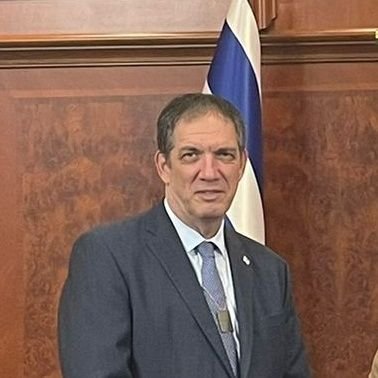
An Israeli diplomat in the Balkans has set off a firestorm of criticism this week, after telling Russian state media that he did not believe that an infamous 1995 massacre of more than 8,000 Bosniak Muslim men and boys constituted a genocide.

Speaking with the Kremlin-controlled Sputnik news agency, Yahel Vilan, Israel's ambassador to Serbia, stated that calling the mass execution committed by Bosnian Serb troops in the town of Srebrenica a genocide "diminishes the importance of that term, which, in my opinion, should only be used for genocides."

"And Israel was invited to The Hague because of the alleged genocide in Gaza. For me, Srebrenica should not be called genocide," Vilan said, referencing the recent South African motion accusing Israel of genocide before the International Court of Justice.

International courts in The Hague have branded the crime in Srebrenica a genocide, Europe's first since World War II. Bosnian Serb top army officers and political leaders also have been convicted of genocide by United Nations judges.

Yahel Vilan (Courtesy)

Vilan's comments came as Bosniak Muslim politicians push for the passage of a draft UN resolution commemorating the genocide. While the measure is supported by a number of European countries and the United States, the diplomat said that he was unsure how Israel would vote on the matter.

Get The Times of Israel's Daily Edition by email and never miss our top stories

By signing up, you agree to the terms

In response, Bosnian Foreign Minister Elmedin Konaković decried Vilan's "shameful statement," arguing that such claims are "not only deeply wrong, but also insulting to the victims and survivors of the genocide in Srebrenica, as well as to all those who hold to truth and justice in the international community."

Reakcija MVP BiH @DinoKonakovic na sramne stavove ambasadora Izraela u Srbiji @AmbassadorVilan:

"U svojstvu ministra vanjskih poslova Bosne i Hercegovine, osjećam dužnost da se oštro suprotstavim sramnoj izjavi ambasadora Izraela u Srbiji @AmbassadorVilan , koji je izjavio da…

— Ministry of Foreign Affairs of BiH (@mfa_bih) April 27, 2024

"To remind Ambassador Vilan, the comparison of the Holocaust and the genocide in Srebrenica is not a matter of competition in suffering, but recognition that every victim of crimes against humanity deserves equal honor and justice. Downplaying the crimes in Srebrenica under the guise of 'importance of terminology' is not only intellectually dishonest, but also morally questionable."

Vilan, he continued, is "a disgrace to diplomacy and a human disgrace."

Srebrenica Genocide Memorial director Emir Suljagic — a massacre survivor who has been subjected to a campaign of antisemitic rhetoric for refusing to condemn Israel following October 7 — also condemned Vilan's statement, declaring that the latter "does not speak for the [Jewish] people, and especially not for the victims of the Holocaust."

While "until this moment, Israel fulfilled its international obligations by extraditing those accused of genocide at the request of the Court of Bosnia and Herzegovina," its ambassador's statement "crosses a red line," he continued, adding that "there is no Holocaust memorial today that questions the genocide in Srebrenica."

Suljagic was joined in his opprobrium by senior leaders of Bosnia's Jewish community.

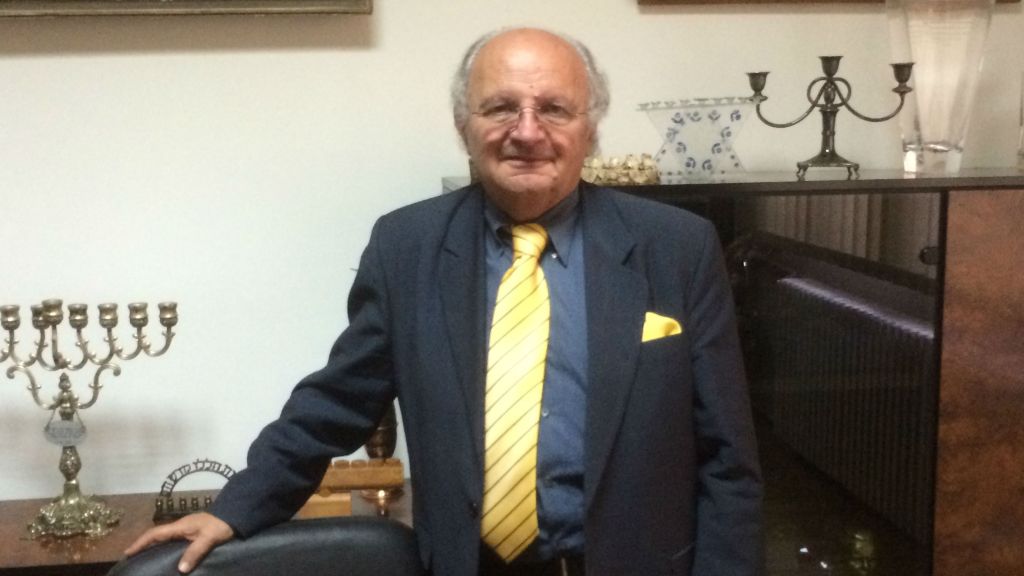
Speaking by phone from Sarajevo, Jakob Finci, president of the Bosnian Jewish community, argued that Vilan had made things harder for his constituents.

Jakob Finci, head of the Bosnia and Herzegovina Jewish community, in his Sarajevo office. (Anne Joseph/Times of Israel)

Many Bosniaks are already against Israel because of the war in Gaza and denying that Srebrenica is a massacre only exacerbates such tensions, he said, speculating that the ambassador's comments were linked to the conflict.

"They are a bit afraid of the final results of Gaza, that some countries will start a case like South Africa [arguing] that this was genocide in Gaza. So it's better to keep to the other side, to deny any kind of crime [can] be called genocide," he said.

Such an approach could rebound on Israel, added Vladimir Andrle, the president of the Jewish community's La Benevolencija philanthropic organization.

"By denying genocide in Srebrenica we are opening the door for Holocaust deniers to use the same logic and to deny verdicts which determine genocide against Jews and courts which brought those verdicts," he said in a WhatsApp message.

"I do hope that this position is the position of one ambassador [and] not the official stand of [the] State of Israel."

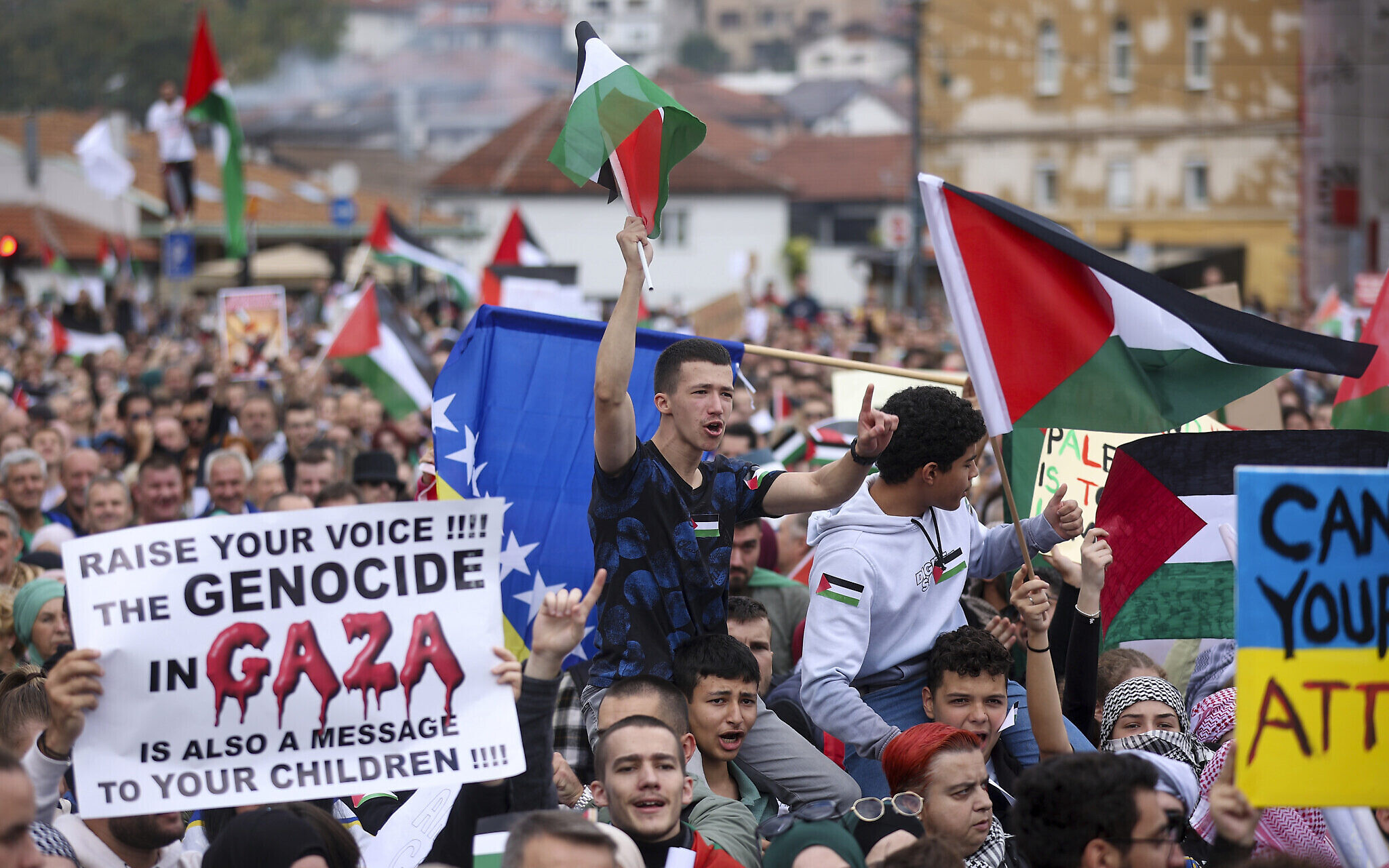
A Bosnian man waves a Palestinian flag during a protest against Israel and in support of Palestinians in Sarajevo, Bosnia, October 22, 2023. (AP Photo/Armin Durgut)

Bosnia and Herzegovina remains ethnically divided and politically tense long after the end of the 1992-1995 war. The troubled Balkan nation is seeking European Union membership, but internal divisions — which have been significantly heightened by arguments over the legacy of the conflict — have hampered the effort.

Bosnian Serb separatist leader Milorad Dodik has threatened that Bosnian Serbs, who control about half of Bosnia, would split from the rest of the country if the Srebrenica resolution is passed in the UN General Assembly.

In an effort to enlist Jerusalem's opposition to the measure, Zeljka Cvijanovié, the Serb member of the country's tripartite presidency, wrote directly to Israeli UN envoy Gilad Erdan last month.

In her letter, Cvijanovié argued that the resolution, advanced by Bosniak politicians, stood "in clear violation of Bosnia and Herzegovina's constitutional framework" and its adoption "would cause internal strife in Bosnia and Herzegovina, badly undermining the inter-ethnic reconciliation that is vital to its future."

Speaking on condition of anonymity, an Israeli official with knowledge of the matter told The Times of Israel that "high-level officials from both sides in Bosnia… look forward to seeing how Israel will vote."

"Our vote is very meaningful due to the context of the Holocaust," the official noted, adding that Israel's position on Srebrenica has always been "pretty vague."

"Only two years ago, Israel was the driving force in getting the UN General Assembly to condemn Holocaust denial. And in 2013, Israel did the legally and morally right thing when it extradited a Bosnian Serb accused of participating in the Srebrenica massacre to stand trial in Bosnia," argued Menachem Rosensaft, a Cornell law professor and genocide expert.

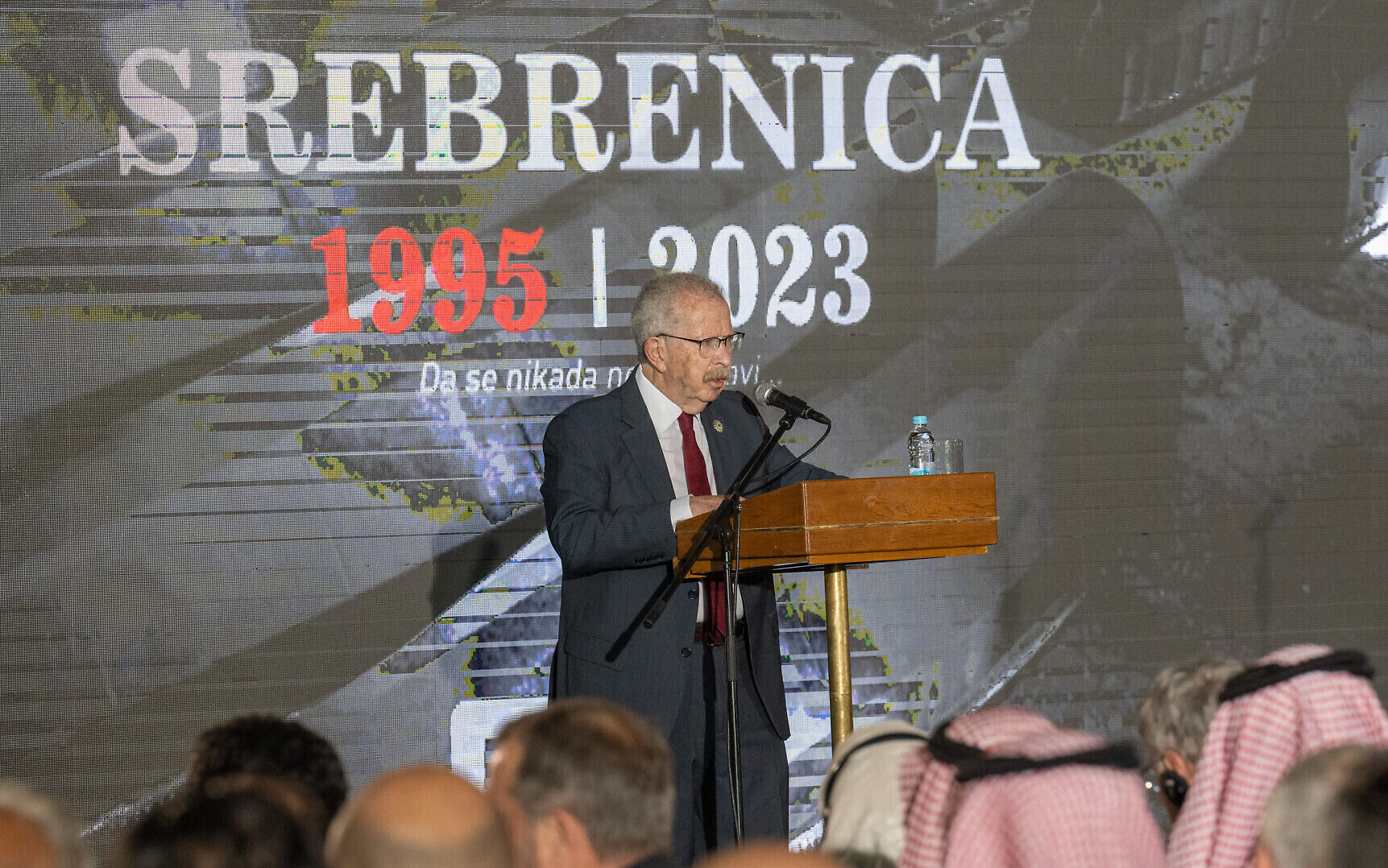
Menachem Rosensaft delivering the keynote address at the commemoration marking the 28th anniversary of the Srebrenica genocide, July 2023. (Courtesy)

"It would be unconscionable if Israel were now to side with Republika Srpska, Serbia, and most probably Russia in opposing — or even abstaining on — the UNGA resolution," the former World Jewish Congress general counsel said.

"At a moment when Jews and Muslims around the world are drifting farther and farther away from each other, all too often set against one another by political and religious leaders intent on stoking the flames of hatred and paranoia, we must at the very least all come together in according the same respect and dignity to the Bosniak victims of the Srebrenica genocide as we accord to the Jewish victims of the Shoah."

Bosnian and Serb politicians have previously sought to mobilize Israeli politicians and scholars as part of the battle over the legacy of Srebrenica — with former Bosnian foreign minister Bisera Turkovic in 2021 explicitly calling on then-foreign minister Yair Lapid to intervene in a domestic battle over genocide denial legislation.

The following year, Lapid, then prime minister, ordered an Israeli diplomat reprimanded for involving himself in a contentious Bosnian domestic political debate over electoral reform.

The Israeli Foreign Ministry did not immediately respond to a request for comment.

The Associated Press contributed to this report.